
Key takeaways
- Compare trellis netting, checking mesh, size, material and cut for gardens, peas, beans, vines, cucumbers, tomatoes and vertical growing in raised beds.
Climbing crops take up far less ground when they grow up instead of out, and trellis netting is the lightest, simplest way to give them that path. A single roll can support a whole row of peas, beans, cucumbers or tomatoes, then roll away for storage at the end of the season. Compared with rigid panels or cages, netting conforms to posts, frames and A-frame setups, and it cuts to whatever length a bed actually needs.
Disclosure: As an Amazon Associate, I earn from qualifying purchases. Product details were verified at the time of writing.
The five rolls below cover the main choices a home gardener faces: a short, tight-mesh roll for raised beds, the long-running professional standard, soft nylon for tender stems, a long plastic roll for big rows, and a true commercial bulk roll. Each one lists its mesh size and full roll dimensions so you can match the net to your row before ordering.
How to Choose Trellis Netting
Mesh size. Most garden netting uses squares between about 3.5 and 6.7 inches. Wide 6 inch squares let you reach through the net to pick beans and cucumbers without tearing leaves, and they suit vigorous vines with large foliage. Tighter mesh around 3.5 inches gives peas, sweet peas and young seedlings more strands to grab early, and it keeps small tendrils from slipping through before they establish. If you grow a mix, a mid-size mesh near 6 inches is the common compromise.
Material. Nylon netting is soft and flexible, so it is gentle on tender stems and easy on hands during harvest, though it can tangle if it is stuffed into storage carelessly. Polyester string net sits in the middle: soft like nylon, with good resistance to sun and stretching. Extruded polypropylene netting, the Hortonova style used by market growers, is stiffer and lighter per foot, holds a flat plane under load, and shrugs off water and soil contact. It is the usual pick for long outdoor rows.
Roll width and length. Width should match your support height: 4 to 5 feet suits most bean poles, tomato rows and raised-bed frames, while wider rolls serve tall cucumber trellises. Length is where gardeners most often underbuy. A 30 foot roll covers one raised bed or a short fence run; 100 to 350 foot rolls handle several rows with enough left for a second layer or a replacement section; bulk rolls over 1,000 feet are for market gardens and community plots.
Vertical or horizontal runs. Strung vertically between posts, netting works as a climbing wall. Stretched horizontally in layers above a bed, it supports cut flowers and bushy plants as they grow through the squares. Many rolls handle both jobs, so one purchase can cover a spring pea fence and a summer flower bed.
Cutting and edges. Every roll here cuts with ordinary scissors. Cut netting holds its squares without fraying on extruded plastic rolls; woven string nets keep their shape best when cuts land mid-square. Leave a few extra inches at each end for tying to posts, and secure the net every 12 to 18 inches so wind load spreads across the frame instead of one tie point.
The 5 Best Trellis Netting Rolls
1. Tcamp Heavy-Duty Polyester Trellis Net, 5 ft x 30 ft

For a single raised bed or a short row of peas, this compact roll is the easiest starting point. Its 3.5 inch squares are the tightest in this group, giving young pea and bean tendrils plenty of strands to catch in the first weeks, and the shorter 30 foot length means less leftover netting to store. It installs vertically on a frame, horizontally over a bed, or folded into an A-frame, and the soft string construction is kind to stems and hands at harvest time.
Specs:
– Material: Polyester string net
– Roll size: 5 ft x 30 ft
– Mesh size: 3.5 in square
– Weight: About 0.5 lb
– Best for: Raised beds, peas, beans, small gardens
2. Tenax Hortonova SM Plant Trellis Net, 48 in x 100 ft
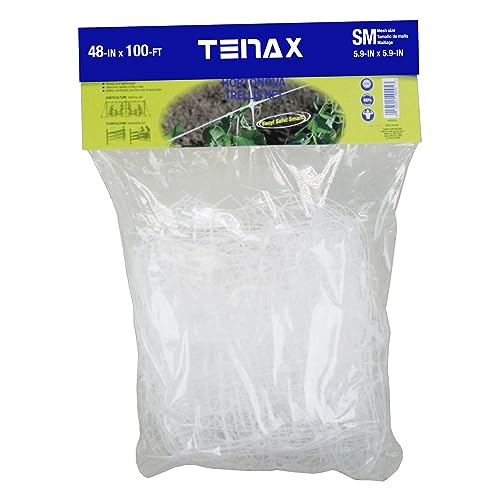
Hortonova is the extruded polypropylene net that market growers standardized on, and this 100 foot roll is the home-garden size of that same net. The 5.9 inch square mesh is wide enough to reach through for picking, the bi-oriented strands hold a flat, taut plane between posts, and the material resists water, mold and soil contact season after season. At 4 feet wide it matches standard bed and fence heights, and the light weight makes a full roll easy to carry down a row.
Specs:
– Material: Polypropylene, bi-oriented extruded net
– Roll size: 48 in (4 ft) x 100 ft
– Mesh size: 5.9 in x 5.9 in
– Tensile strength: 78 lb per ft
– Best for: Beans, cucumbers, tomatoes, flower support layers
3. Toolazy Trellis Netting, 5 ft x 350 ft

Gardeners who prefer soft netting over long runs will want this nylon roll. The woven nylon strands are gentle on cucumber and tomato stems, the 6 inch squares leave room to reach in for harvest, and the roll arrives wound on a cardboard reel so it pays out without the tangles loose netting is known for. At 350 feet it covers multiple rows in one purchase, and it cuts cleanly to length for A-frames, fences and greenhouse runs.
Specs:
– Material: Nylon
– Roll size: 5 ft x 350 ft
– Mesh size: 6 in square
– Format: Roll on a cardboard reel
– Best for: Long rows, tender stems, indoor and outdoor growing
4. vensovo Heavy Duty Trellis Netting Roll, 47 in x 328 ft

This extruded plastic roll is the long-run counterpart to the Tenax pick, stretching 328 feet at just under 4 feet wide. The 6 inch square mesh handles heavy cucumber, squash and tomato vines, and the smooth plastic strands clean up quickly at season’s end since soil and dried tendrils shake off instead of tangling. It is a practical choice for gardeners fencing several beds who want one roll to cover the whole plot, with green and white versions and several widths sharing the same listing family.
Specs:
– Material: Plastic, extruded net
– Roll size: 47 in x 328 ft
– Mesh size: 6 in square
– Weight: 2.64 lb
– Best for: Multiple beds, cucumbers, squash, long fence runs
5. Hortomallas Professional Grade Trellis Netting Roll, 4 ft x 4,920 ft

Market gardens, community plots and farms go through netting by the thousand feet, and this is the roll built for them. The 4,920 foot length covers row after row of vegetables in a single purchase, and the 5.9 by 6.7 inch mesh is the classic field spacing for cucumbers, beans and tomatoes grown at scale. The polypropylene construction tolerates full-season sun and repeated handling, and sections can be cut as needed while the rest of the roll stays in storage for the next planting.
Specs:
– Material: Polypropylene
– Roll size: 4 ft x 4,920 ft
– Mesh size: 5.9 in x 6.7 in
– Grade: Professional / commercial
– Best for: Market gardens, farms, community plots
Comparison Table
| Product | Material | Roll Size | Mesh Size |
|---|---|---|---|
| Tcamp Trellis Net | Polyester | 5 ft x 30 ft | 3.5 in |
| Tenax Hortonova SM | Polypropylene | 4 ft x 100 ft | 5.9 in x 5.9 in |
| Toolazy Trellis Netting | Nylon | 5 ft x 350 ft | 6 in |
| vensovo Trellis Netting Roll | Plastic | 47 in x 328 ft | 6 in |
| Hortomallas Professional | Polypropylene | 4 ft x 4,920 ft | 5.9 in x 6.7 in |
FAQ
What mesh size is best for peas and beans?
Peas climb happily on 6 inch mesh once they get going, but a tighter mesh near 3.5 inches gives seedlings more contact points in the first two weeks. Beans are stronger climbers and do well on any size in this guide.
Can trellis netting hold tomatoes?
Yes, when the net is tied to sturdy posts every few feet. Growers run it vertically and weave stems through the squares as plants grow, or stretch it horizontally in layers above the row so branches rest on the grid.
How long does garden netting last outdoors?
Polypropylene rolls commonly serve several seasons before sun exposure makes them brittle. Nylon and polyester string nets also last multiple seasons if they are dried and stored out of sunlight between plantings.
What posts work with trellis netting?
T-posts, bamboo poles, wooden stakes and PVC frames all work. Space supports about 5 to 8 feet apart, pull the net taut, and tie it every 12 to 18 inches along the top and sides.
Can I reuse netting the next year?
Usually, yes. Cut the vines free rather than pulling them through, shake the net clean, let it dry, and roll it loosely. String nets tangle more than extruded plastic during this step, so roll them onto a board or tube.
Verdict
For most home gardens, the Tenax Hortonova SM roll is the dependable default: proven mesh size, honest 100 foot length, and a material that survives several seasons. Small raised beds are better served by the Tcamp roll, whose tight 3.5 inch mesh and short length match a single bed with nothing wasted. If you prefer soft netting that is gentle on stems, the Toolazy nylon roll covers long rows from one reel, while the vensovo plastic roll does the same job in an easy-clean extruded format. Growers planting at field scale should go straight to the Hortomallas bulk roll and cut sections as each row goes in.
More from Amazon
Programs that pair well with the guide above. Offers and eligibility are set by Amazon and may change.
A free business account with business pricing and bulk-buying tools for work, shop or home office.
Create a business accountFree shipping on eligible items, Prime Video and more. Eligible new members can start with a free trial.
Start a Prime free trialAudiobooks and podcasts to listen to on the go. Eligible new members can start with a free trial.
Try Audible freeAd-free music streaming. Eligible new subscribers can start with a free trial.
Try Music Unlimited freeAs an Amazon Associate we earn from qualifying purchases.

Write Your Review
No reviews yet. Be the first to share your experience!