
Key takeaways
- Compare coco coir, checking bricks, bags, washed and buffered for gardens, pots, seedlings, houseplants, hydroponics, worm bedding and potting mixes too.
Coco coir is the fibrous pith and husk of the coconut, washed, dried, and pressed into dense bricks that turn into a light, spongy growing medium the moment water touches them. Gardeners reach for it because it holds moisture like a sponge yet still lets air reach the roots, and because a brick that fits in a shoebox can replace a bulky bag of peat-based mix. It starts seeds, loosens heavy potting blends, lines worm bins, and gives hydroponic growers a clean, soil-free base.
Disclosure: As an Amazon Associate, I earn from qualifying purchases. Product details were verified at the time of writing.
The five picks below cover the main ways coir is sold: a small single brick for seed trays, a seed-starting brick from a heritage seed house, two full-size 10-pound blocks with different yields, and one nutrient-enriched block for growers who want a head start built in. Each entry lists dry weight and expanded volume, the two numbers that tell you what you are really getting.
How to Choose Coco Coir
Brick size and expansion. Coir is sold by dry weight, but you plant by volume. A 650-gram brick makes roughly two gallons of loose medium, while a 10-pound block can yield anywhere from about 12 to 20 gallons depending on how finely the pith is ground and how tightly it was pressed. Compare the expanded volume, not the shelf size, and match the block to the job: small bricks for a tray of seedlings, big blocks for raised beds and large pots.
Washed and buffered. Coconuts often grow near salt water, and unwashed coir can carry enough sodium to stress young roots. Washed coir has been rinsed to lower its salt load, which shows up as a low EC (electrical conductivity) figure. Buffered coir goes one step further: it is soaked in a calcium solution that displaces leftover sodium and potassium, so the medium does not steal calcium and magnesium from your feed later. For hydroponics and seedlings, buffered or at least well-washed coir is the safer pick.
Texture: pith, fiber, and chips. Fine pith is the soft, soil-like fraction; it holds the most water and suits seed starting and potting mixes. Longer fiber adds structure and drainage. Coarse chips drain fastest and are favored for orchids and chunky blends. Most bricks are mostly pith with some fiber mixed in, which is the most versatile texture for general garden use.
Bricks versus loose bags. Loose coir in a bag is ready to scoop but takes up shelf space and ships a lot of air. Bricks store flat for years, travel easily, and ask only for a bucket and water at planting time. If you mix medium in small batches, bricks also let you hydrate just what you need and keep the rest dry.
Storage and reuse. Keep unopened bricks somewhere dry; they keep almost indefinitely. Hydrated coir that a plant has finished with can be shaken free of roots, refreshed with fresh material, and used again for outdoor beds, though most growers retire it to the garden after one indoor cycle.
The 5 Best Coco Coir Bricks and Blocks
1. Plantonix Coco Bliss Coco Coir Brick, 650 g — Best Small Brick for Seed Starting

This is the brick to keep on the potting bench for everyday jobs. Each 650-gram block from Plantonix is pre-rinsed and pre-screened, so the sand, rocks, and stray fiber that pad out lesser coir have already been removed before pressing. Soak it in a bucket and it loosens into about two gallons of fine, even medium — enough for a couple of seed trays, a round of cuttings, or refreshing the top layer of a houseplant mix. The coir is OMRI Listed, and because the bricks are sold singly as well as in multi-packs, it is easy to match the amount to a small indoor garden without storing a giant block.
Specs:
– Form: Compressed brick, single
– Dry weight: 650 g (1.43 lb)
– Expanded volume: About 2 gallons
– Material: 100% coconut coir pith
– Treatment: Pre-rinsed and pre-screened, OMRI Listed
– Best for: Seed starting, cuttings, small potting batches
2. Burpee Organic Coconut Coir Concentrated Seed Starting Mix, 16 Quart — Best for Germination Trays
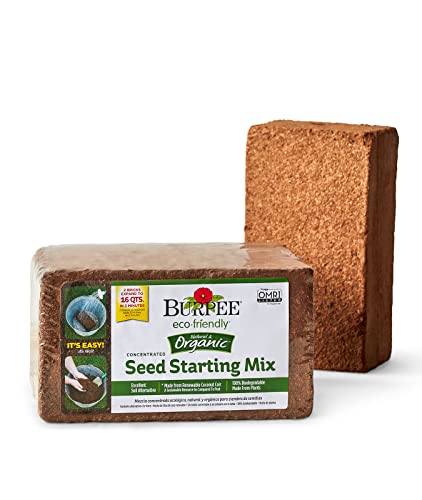
Burpee has sold seeds since 1876, and this brick is built around the job the company knows best: getting seeds to sprout. The concentrated pack weighs 2.2 pounds dry and expands into 16 quarts of fine seed starting mix — the manufacturer directions note about eight quarts per brick — with a texture screened for the shallow cells and small pots where seedlings start life. The fine grade holds steady moisture against tiny seeds without crusting over, and the all-coir formula carries no added feed, so you control nutrition from the first true leaves onward. It is a natural fit for gardeners who start tomatoes, peppers, and herbs indoors weeks before the last frost.
Specs:
– Form: Compressed concentrated brick pack
– Dry weight: 2.2 lb
– Expanded volume: 16 quarts total (about 8 quarts per brick)
– Material: 100% coconut coir
– Model: 90728
– Best for: Seed starting trays and indoor germination
3. Back to the Roots Organic Coir, 51 Quart — Best Mid-Size Block for Pots and Beds

When one seed tray turns into a patio full of containers, this 10-pound block from Back to the Roots is the step up. Add water and it expands into 51 quarts — two cubic feet — of fluffy medium, enough to fill several large pots or top up a raised bed. The coir is OMRI Listed and pH balanced, so it drops into potting blends without the extra rinsing routine that raw coir sometimes needs. The texture is a general-purpose mix of pith and fiber that holds water through a hot afternoon yet drains freely enough for peppers, flowers, and herbs in containers.
Specs:
– Form: Compressed block
– Dry weight: 10 lb
– Expanded volume: 51 quarts (2 cubic feet)
– Material: 100% coconut coir
– Treatment: OMRI Listed, pH balanced
– Best for: Container gardens, raised beds, potting mix base
4. Kempf Organic Coco Coir Brick, 10 lb — Best High-Yield Washed Block

Kempf takes a simpler approach: one washed 10-pound brick of coconut husk fiber and nothing else. That plain formula produces the largest stated yield in this group, expanding into roughly 17 to 20 gallons of loose coir once soaked. The washed fiber suits gardeners who blend their own medium from scratch — part coir, part compost, part perlite — and want a neutral base that brings no added nutrients or surprises. It is equally at home loosening clay-heavy bed soil, bedding a worm bin, or filling the bottom of deep planters where pure potting mix would be wasted.
Specs:
– Form: Compressed brick
– Dry weight: 10 lb
– Expanded volume: About 17 to 20 gallons
– Material: 100% coconut husk coir
– Treatment: Washed
– Best for: Custom soil blends, worm bedding, bed amendment
5. Gro-Med Coco Coir Brick, 10 lb — Best Enriched Block for Fast Starts

Most coir is an inert blank slate, but this Gro-Med block arrives with an NPK charge blended in, so seedlings and transplants get a gentle first feed the moment roots spread into it. The 10-pound brick expands to 80 quarts of medium, a yield in line with the other full-size blocks here, and the fine pith texture works for seed starting, vegetables, and even mushroom growing, a use the maker calls out directly. Growers who prefer to control every input will still choose plain coir, but for a quick bed fill or a batch of hungry tomato starts, the built-in nutrition saves a step.
Specs:
– Form: Compressed brick
– Dry weight: 10 lb
– Expanded volume: 80 quarts
– Material: Coconut coir with NPK enrichment
– Treatment: Nutrient-enriched, ready after soaking
– Best for: Vegetable starts, fast bed fills, mushroom growing
Comparison Table
| Product | Form | Dry Weight | Expanded Volume | Standout Trait |
|---|---|---|---|---|
| Plantonix Coco Bliss Brick | Single brick | 650 g | About 2 gallons | Pre-rinsed and pre-screened, OMRI Listed |
| Burpee Organic Coconut Coir, 16 Quart | Concentrated brick pack | 2.2 lb | 16 quarts | Fine grade made for seed starting |
| Back to the Roots Organic Coir | Compressed block | 10 lb | 51 quarts | OMRI Listed and pH balanced |
| Kempf Organic Coco Coir Brick | Compressed brick | 10 lb | 17 to 20 gallons | Washed fiber, highest stated yield |
| Gro-Med Coco Coir Brick | Compressed brick | 10 lb | 80 quarts | NPK enriched for a built-in first feed |
FAQ
How much water does a coir brick need?
A good rule is to start with roughly five parts water to one part dry coir by volume, pour it over the brick in a bucket or tub, and wait ten to fifteen minutes. The brick drinks it in and crumbles apart; add a little more water if the center is still dry and firm.
Do I need to rinse or buffer coir before planting?
Coir sold as washed or pre-rinsed is ready for most garden use straight after soaking. For hydroponics and salt-sensitive seedlings, buffered coir — or a home soak in calcium-rich water followed by a rinse — gives the most predictable results.
Can coco coir replace potting soil completely?
It can be the whole medium in hydroponics and container growing, but plain coir holds almost no nutrients, so plants need regular feeding. For outdoor pots and beds, many gardeners blend coir with compost and perlite to add nutrition and structure.
Is coco coir good for worm bins?
Yes. Soaked and fluffed coir makes excellent worm bedding: it holds moisture, stays loose, and resists packing down. The Kempf and Plantonix bricks in this list are both plain coir with nothing added, which is what worms want.
How long does a dry brick keep?
Kept dry and out of direct sun, a compressed brick stores for years without losing quality. Once hydrated, use the coir within a few weeks or let it dry out again before storing, so it does not sour in a sealed bag.
Verdict
For most home gardeners, the Back to the Roots block hits the sweet spot: a full 10 pounds of OMRI Listed, pH balanced coir that expands to 51 quarts of ready-to-blend medium. Keep the small Plantonix brick on hand for seed trays and quick top-ups, and choose the Burpee pack when germination is the whole point. Blenders and worm keepers should take the plain washed Kempf brick, while the Gro-Med block suits growers who want a light first feed already in the mix.
More from Amazon
Programs that pair well with the guide above. Offers and eligibility are set by Amazon and may change.
A free business account with business pricing and bulk-buying tools for work, shop or home office.
Create a business accountFree shipping on eligible items, Prime Video and more. Eligible new members can start with a free trial.
Start a Prime free trialAudiobooks and podcasts to listen to on the go. Eligible new members can start with a free trial.
Try Audible freeAd-free music streaming. Eligible new subscribers can start with a free trial.
Try Music Unlimited freeAs an Amazon Associate we earn from qualifying purchases.








Write Your Review
No reviews yet. Be the first to share your experience!