
Key takeaways
- Compare massage balls by size, firmness and surface build, with the start-against-a-wall rule and ease-off-the-pressure habit for safe self massage.
A massage ball is the smallest tool in the self-massage drawer: you trap it between your body and a wall or the floor, then let your own weight meter out the pressure. That small contact patch is the whole point — a ball reaches the knot inside a glute, the band along a calf, or the sole of a foot in a way a broad roller cannot. This guide covers five manual balls in the shapes that matter: a small layered-foam ball, a peanut double ball, a firm lacrosse-style pair, a spiky foot ball, and one large foam ball for wide muscles. Foam rollers have their own guide — they cover long muscles better — and powered massage guns are a different product entirely; nothing here vibrates, heats, or plugs in.
The safety rules come first, because they decide how every ball below gets used. Begin against a wall, where leaning in and stepping away gives you fine control over pressure, and only move to the floor once you know how a spot responds. Never roll a single ball directly on the spine or on a joint — the peanut shape exists precisely so the muscles beside the spine take the load while the groove clears the bone. Ease off at once if pressure turns sharp, shoots down a limb, or leaves numbness behind; those are signals to stop, not to push through. Pain that keeps returning, or any spot that stays sore for days, belongs with a clinician rather than a firmer ball. Finally, keep the balls clean and look them over before a session: a rubber ball with a crack or a split seam comes out of the bag the day you spot it.
Disclosure: As an Amazon Associate, I earn from qualifying purchases. Product details were verified at the time of writing.
How to Choose a Massage Ball
Size sets the reach. A 2.5-inch ball is the pinpoint size: it fits under a foot, into the curve of a calf, and against the wall for shoulder work. A 5-inch ball spreads the same body weight across a far wider patch, which suits quads, hamstrings, and glutes that find a small ball too intense. Many people end up owning one of each, using the small ball for detail work and the large one for broad, end-of-day sessions.
Firmness is the intensity dial. Solid rubber gives the firmest pressure and the least give — a lacrosse-style ball under a glute is the deepest work in this guide. Layered EVA foam compresses a little under load, which softens the edge of the pressure without losing the point. If you are new to self massage, begin with foam or a larger ball and earn your way to solid rubber; bruising is a sign the tool was too firm for the tissue, not a sign the session worked.
Surface changes the feel and the grip. A smooth ball with a slightly grippy finish stays where you park it against a wall and feels even on bare skin. A textured surface adds friction that helps on clothed back work. Spikes are a foot tool: the points spread pressure across the sole and arch, and most people find them far too much on a back or a calf.
Shape decides where the ball may go. A single ball works anywhere a muscle is thick enough to take it — feet, glutes, calves, chest, forearms. A peanut, two balls joined with a groove between them, is the one shape built for the back: the lobes rest on the muscles running either side of the spine while the groove keeps load off the vertebrae themselves. A peanut also cradles the base of the skull and the neck muscles gently when used against a wall.
Care is simple but not optional. Foam balls that are machine washable are the easiest to keep fresh; rubber balls wash with soap and water and need to dry fully before they go back in a bag. Sweat and floor grit shorten a ball’s life, and a split or cracked ball goes in the bin — a seam that gives way mid-session dumps your weight suddenly onto the floor.
One caution on heated balls. None of the picks below is a gel-filled ball made to be warmed. A gel-filled set sold under the Vivitar name was recalled in 2019 after balls leaked or ruptured during or after microwaving, so never put any massage ball in a microwave or hot water unless its maker built it for exactly that.
The 5 Best Massage Balls
1. TriggerPoint MB1 Massage Ball

The MB1 is the all-round pick of this guide, and the ball most people should buy first. Its layered construction stacks foams of different densities, so the surface yields a little on contact and then firms up as you lean in — TriggerPoint describes the feel as mimicking a therapist’s thumbs, and in practice it lands between a tennis ball and a lacrosse ball for intensity. At 2.5 inches it fits the classic spots: under the foot, into the glute against a wall, along the calf, and into the chest near the shoulder. The EVA surface grips the wall instead of skating away, the whole ball weighs barely an ounce, and it is machine washable, which makes it the easiest pick here to keep clean in a gym bag.
Specs
- Diameter: 2.5 in
- Material: Multi-density EVA foam, layered construction
- Weight: 1.2 oz
- Surface: Slip-resistant foam
- Care: Machine washable
- Best for: First ball; feet, glutes, calves, and chest work
2. 5BILLION Peanut Massage Ball

The peanut is the back specialist. Two 2.5-inch lobes joined in the middle form a groove that sits over the spine, so the pressure lands on the long muscles either side of it — the exact placement a single ball must never take. This one is molded from solid natural rubber, which makes it firm: against a wall it gives a deep, steady load along the upper and lower back, and the same shape cradles the muscles at the base of the skull. At five inches long and twelve ounces it has enough heft to stay put on the floor for glute and hamstring work as well. A carry bag comes in the box. Because the rubber has so little give, new users should keep this one on the wall, where stepping forward eases the pressure off in a second.
Specs
- Shape: Peanut double ball with center groove
- Size: 5 in long, 2.5 in diameter
- Material: 100% natural rubber
- Weight: 12 oz
- Includes: Carry bag
- Best for: Muscles along the spine, neck base, glutes
3. Kieba Massage Lacrosse Balls, Set of 2

This is the firmest option in the guide, and the simplest: two solid rubber balls at the official lacrosse size of 2.5 inches. A lacrosse-style ball is the deep end of self massage — under a glute on the floor it reaches tissue that foam balls compress against and miss, and a pair means one can live in a desk drawer while the other stays in a gym bag, or both can work side by side along the back against a wall. The solid build shrugs off years of use and washes clean with soap and water. Respect the firmness: these belong on thick muscle — glutes, hamstrings, calves, feet in small doses — and they are the wrong tool for ribs, the neck, or any spot that bruises easily.
Specs
- Quantity: 2 balls
- Diameter: 2.5 in each, official lacrosse size
- Material: 100% solid rubber
- Firmness: Firm, minimal give
- Set weight: 0.23 kg
- Best for: Deepest pressure on glutes, hamstrings, and calves
4. Pro-Tec Athletics Spiky Massage Ball
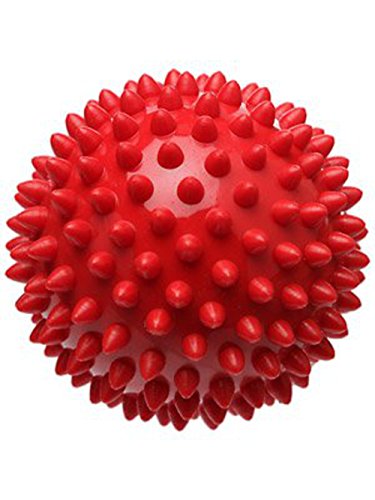
The spiky ball is a foot tool first and a hand tool second. Its firm points spread across the sole as you roll, working the arch and the heel pad with a busy, stimulating pressure that a smooth ball cannot copy — the standard morning routine for stiff feet is a minute of slow passes under body weight, seated, before the day begins. The high-density build holds its shape under a full standing load, and at 2.75 inches it is slightly larger than a lacrosse ball, which keeps it from digging too sharply into tender arches. It also earns a place in hand and forearm work, squeezed or rolled under a palm on a desk. On backs and calves most people will find the points too much; keep it below the ankle and in the hands, where it shines.
Specs
- Diameter: 2.75 in
- Model: PTSpike
- Build: High-density ball with firm spikes
- Surface: Textured points across the whole ball
- Best for: Feet, arches, heels, and hand work
5. Pro-Tec Athletics The Orb

The Orb solves the opposite problem from the lacrosse pair: what to use when a small ball is simply too intense. At five inches across, this high-density EVA foam ball spreads your weight over a broad patch, so quads, hamstrings, glutes, and the upper back get firm but forgiving pressure — deep enough to work, gentle enough for daily use and for anyone returning to training after a layoff. It rolls in every direction without the wandering a smaller ball does on wide muscles, and it doubles as a wall ball for the whole back. If the MB1 above is the detail tool, the Orb is the broad brush; between the two, most bodies are covered.
Specs
- Diameter: 5 in
- Material: High-density EVA foam
- Part number: PTOrb-5-Inch
- Build: Single large ball, multi-directional roll
- Best for: Quads, hamstrings, glutes, and gentler daily work
Comparison Table
| Ball | Size | Material | Shape | Best for |
|---|---|---|---|---|
| TriggerPoint MB1 | 2.5 in | Layered EVA foam | Single | All-round first ball |
| 5BILLION Peanut | 5 x 2.5 in | Natural rubber | Peanut | Back muscles beside the spine |
| Kieba Lacrosse Balls | 2.5 in, set of 2 | Solid rubber | Single, pair | Deepest pressure on thick muscle |
| Pro-Tec Spiky Ball | 2.75 in | High-density, spiked | Single | Feet, arches, and hands |
| Pro-Tec The Orb | 5 in | High-density EVA foam | Single, large | Wide muscles, gentler pressure |
Frequently Asked Questions
Should I use a massage ball against a wall or on the floor?
Begin at the wall. Leaning against a wall lets you dial pressure up or down by shifting your feet, and stepping away ends a session instantly. Floor work puts far more of your body weight through the ball, so save it for thick muscles like glutes and hamstrings once you know how the tissue responds.
How long should I spend on one spot?
Short and slow wins. Roll gently over a tender area for half a minute or so, pause on a sore point for a few calm breaths, then move on. Chasing one knot for many minutes mostly bruises the tissue around it. A full session on feet, calves, and glutes usually takes five to ten minutes.
Can a massage ball replace a foam roller?
No — they cover different ground. A roller spreads load along long muscles like the back of the thigh and the upper back, while a ball concentrates pressure into one small patch. Most routines use the roller first for broad work and the ball second for the spots the roller could not reach.
How do I clean a massage ball?
Wash rubber balls with soap and water and let them dry fully before storing. The foam MB1 in this guide is machine washable. Whichever ball you own, wipe it down after sweaty sessions, keep it out of a sealed damp bag, and check the surface for cracks or splits each time — a damaged ball gets replaced, not nursed along.
When should I stop and see a clinician instead?
Stop if pressure causes sharp pain, numbness, or pain that travels down an arm or leg. Book a clinician for pain that keeps returning to the same spot, soreness that lasts for days after gentle work, any recent injury, or numbness that does not fade once the ball is removed. A massage ball is a comfort tool, not a diagnosis.
Verdict
For most people, the TriggerPoint MB1 is the ball to buy first: the layered foam gives controlled, forgiving pressure in the classic 2.5-inch size, and it washes clean in a machine. The 5BILLION Peanut is the back pick, the one shape that loads the muscles beside the spine while its groove spares the bone. The Kieba lacrosse pair is the deep end — solid rubber for thick muscle and nothing else. The Pro-Tec Spiky Ball owns the feet and hands, and the Pro-Tec Orb is the gentle giant for wide muscles and daily sessions. Whichever you choose, hold the rules that matter: begin at the wall, keep single balls off the spine and the joints, ease off the moment pressure turns sharp, and retire any ball that cracks.
More from Amazon
Programs that pair well with the guide above. Offers and eligibility are set by Amazon and may change.
A free business account with business pricing and bulk-buying tools for work, shop or home office.
Create a business accountFree shipping on eligible items, Prime Video and more. Eligible new members can start with a free trial.
Start a Prime free trialAudiobooks and podcasts to listen to on the go. Eligible new members can start with a free trial.
Try Audible freeAd-free music streaming. Eligible new subscribers can start with a free trial.
Try Music Unlimited freeAs an Amazon Associate we earn from qualifying purchases.
Write Your Review
No reviews yet. Be the first to share your experience!