
Key takeaways
- Compare report covers, checking size, material, fastener type and capacity for school projects, office files and business documents and reports.
A loose stack of printed pages looks unfinished the moment it lands on a desk. A report cover fixes that in seconds: it protects the pages, keeps them in order, and lets the title page show through so the reader knows what they are holding before they open it. Whether you are handing in a school project, sending a proposal to a client, or distributing a quarterly summary at a meeting, the right cover makes the same document feel deliberate and complete.
Disclosure: As an Amazon Associate, I earn from qualifying purchases. Product details were verified at the time of writing.
Report covers fall into a few families. Prong covers grip three-hole punched pages with metal tangs. Sliding bar covers clamp unpunched pages along the spine, so nothing needs to be punched. Binding covers are single sheets paired with a comb, wire, or coil binding system. Each style suits a different workflow, and the five picks below cover all three approaches, from an eight-pack for occasional handouts to bulk boxes for offices that bind documents every week.
How to Choose a Report Cover
Size. Most covers are built for letter paper at 8.5 x 11 inches. Some are cut slightly oversize, which helps when pages will be trimmed or when a binding spine adds width. A few covers accept both letter and A4 sheets, which matters for schools and offices that handle documents from international sources. Match the cover to the paper you actually print, and check the stated sheet size rather than assuming every cover is the same.
Material. Paper stock covers feel traditional and take labels well, but they crease and absorb moisture. Polypropylene covers are flexible, resist spills, and survive repeated handling in backpacks and briefcases. Vinyl and PVC covers are stiffer and clearer, which is why they are common as front sheets for bound documents. If the document will be mailed, carried daily, or stored for years, a plastic cover holds up better than a paper one.
Fastener type. Three-prong fasteners are the most secure option for punched pages: the metal tangs fold down and hold the stack firmly, and pages can still be added or removed. Sliding bars are faster, since the pages slide into a fold and a bar clamps the edge, but very thick stacks can work loose over time. Swing clips and built-in fasteners sit between the two. Binding covers have no fastener of their own and rely on a binding machine and spines.
Capacity. Capacity is stated in sheets, and it is the spec that most often disappoints buyers who skip it. Thin handouts of ten to twenty sheets fit almost any cover. A seventy-sheet report needs a cover designed for that thickness, or the spine will bow and pages will slip. Buy for the thickest document you produce regularly, not the thinnest.
Pack size and front style. A clear front displays the title page, which removes the need for a label. Opaque covers give a more formal, uniform look and hide the contents until opened. Small packs suit students and home offices; boxes of fifty or one hundred suit departments that prepare packets on a schedule.
The 5 Best Report Covers
1. COIDEA Report Covers with 3-Prong Fasteners, 8 Pack

This eight-pack from COIDEA is a practical starting point for students and small offices. Each cover pairs a clear front with a colored back, so the title page stays visible while the document still gets a finished, uniform look. Three metal prongs hold punched pages securely, and the stated capacity of one hundred sheets covers everything from a short essay to a thick training manual. The plastic construction shrugs off the scuffs and light moisture that paper stock covers cannot, and the covers fit both A4 and letter sheets, which helps in mixed-document environments. For occasional reports where you want a secure hold without a binding machine, this is the straightforward pick.
Specs
- Sheet size: A4 and letter (8.5 x 11 in)
- Material: Plastic (polypropylene)
- Fastener: 3 metal prongs for punched pages
- Capacity: Up to 100 sheets
- Front: Clear, with colored back
- Pack size: 8 covers
2. SOLARRA Report Covers with Sliding Bar, 20 Pack

SOLARRA’s sliding bar covers are built for speed. Instead of punching holes, you slide the page stack into the cover fold and push the 10 mm bar along the spine to clamp everything in place. Assembly takes seconds, and pages can be swapped just as quickly, which suits resumes, quotes, and handouts that get updated often. The covers measure 9 x 12 inches, accept A4 and letter paper, and hold up to seventy sheets per cover. The transparent front keeps the title page on display, and the polypropylene body resists moisture and tearing. With twenty covers in the pack, a small team can standardize its handouts without keeping a binder and punch on hand.
Specs
- Sheet size: A4 and letter (cover measures 9 x 12 in)
- Material: Polypropylene (PP)
- Fastener: 10 mm sliding bar, no punching required
- Capacity: Up to 70 sheets
- Front: Clear
- Pack size: 20 covers
3. C-Line Clear Report Covers Only, Vinyl, 100 per Box
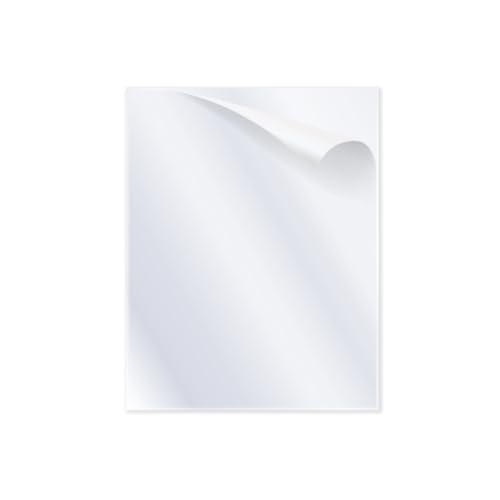
C-Line has supplied offices for decades, and this bulk box reflects that heritage. The covers are clear vinyl sheets sized 8.5 x 11 inches, designed to work with the brand’s Slide ‘N Grip binding bars, which are sold separately. That modular setup suits offices that already stock the bars and burn through covers quickly: one hundred covers arrive in a single box, ready for recurring packets, training materials, and client leave-behinds. Vinyl is heavier and clearer than basic polypropylene, so title pages read crisply through the front, and the covers open flat for reading. If your workflow already runs on slide bars, this is the economical way to keep covers in supply.
Specs
- Sheet size: Letter (8.5 x 11 in)
- Material: Vinyl
- Fastener: None included; pairs with Slide ‘N Grip binding bars
- Capacity: Set by the binding bar used
- Front: Clear
- Pack size: 100 covers
4. TruBind Binding Covers, Crystal Clear PVC, 7 Mil, 100 per Box

TruBind’s covers are single clear sheets made for bound documents. At 7 mil thick, the PVC is noticeably sturdier than the thin sheets bundled with many binding kits, and the oversize cut of 8.75 x 11.25 inches means the cover extends slightly past the page edges for extra protection. Rounded corners resist the dog-earing that square corners pick up in transit. The sheets arrive unpunched, so they work with comb, wire, and coil systems alike, and there is no tissue interleaving to peel away before use. Offices with a binding machine that produce proposals, manuals, and catalogs in volume will appreciate the box of one hundred.
Specs
- Sheet size: Letter, oversize cut (8.75 x 11.25 in)
- Material: PVC, 7 mil thick
- Fastener: None; for comb, wire, or coil binding
- Capacity: Set by the binding spine used
- Corners: Rounded
- Pack size: 100 covers
5. Fellowes Binding Presentation Covers, 8 Mil, Letter, 25 Pack

Fellowes is a familiar name in binding, and its Crystals presentation covers are the heavier-duty option in this group. The 8 mil clear plastic is thick enough to stand up on a shelf without slumping, which makes these covers a good front sheet for reference manuals and reports that stay in circulation. They are unpunched and sized for letter documents, ready to run through a comb binding machine alongside a solid back cover. The pack of twenty-five suits a small office that binds a few documents a week rather than hundreds. If your bound reports feel flimsy with standard covers, stepping up to this thickness is the simplest fix.
Specs
- Sheet size: Letter (8.5 x 11 in)
- Material: Plastic, 8 mil thick
- Fastener: None; for use with binding systems
- Capacity: Set by the binding spine used
- Front: Clear
- Pack size: 25 covers
- Model: 52043
Comparison Table
| Product | Size | Material | Fastener | Capacity | Pack |
|---|---|---|---|---|---|
| COIDEA 3-Prong Report Covers | A4 / Letter | Polypropylene | 3 metal prongs | 100 sheets | 8 |
| SOLARRA Sliding Bar Report Covers | A4 / Letter | Polypropylene | 10 mm sliding bar | 70 sheets | 20 |
| C-Line Clear Report Covers | Letter | Vinyl | Binding bar (separate) | Bar dependent | 100 |
| TruBind Binding Covers | Letter oversize | PVC, 7 mil | Binding spine | Spine dependent | 100 |
| Fellowes Presentation Covers | Letter | Plastic, 8 mil | Binding spine | Spine dependent | 25 |
FAQ
Do report covers fit A4 paper as well as letter?
Some do. The COIDEA and SOLARRA covers above accept both A4 and letter sheets. Others, like the C-Line, TruBind, and Fellowes covers, are cut for letter documents, so check the stated sheet size before ordering if your office prints A4.
Which fastener type holds pages most securely?
Metal prongs through punched holes hold the firmest, because each page is physically captured. Sliding bars clamp the edge of the stack and are faster to load, but very thick or heavily handled documents can loosen. For permanent bound documents, a binding machine with comb or wire spines is the most durable route.
Can I reuse report covers?
Yes. Prong and sliding bar covers can be emptied and refilled many times, and plastic covers outlast paper stock ones in repeated use. Binding covers are effectively permanent once punched and bound, so they are usually treated as single-document supplies.
What thickness should I look for in a binding cover?
For everyday reports, 5 to 7 mil is typical. An 8 mil cover like the Fellowes option adds stiffness for documents that will be shelved, mailed, or handled often. Thicker covers also protect the first page better against bends and spills.
Verdict
For most people, the COIDEA three-prong covers are the safest buy: they hold punched pages securely, show the title page through a clear front, and handle thick documents without extra equipment. If you dislike punching holes, the SOLARRA sliding bar covers assemble in seconds and suit frequently updated handouts. Offices that already bind documents should look at the C-Line vinyl covers for slide-bar workflows, the TruBind PVC sheets for high-volume binding, or the thicker Fellowes covers when the finished report needs to feel substantial. Match the cover to your thickest regular document and your fastening method, and even routine paperwork will leave the desk looking finished.
More from Amazon
Programs that pair well with the guide above. Offers and eligibility are set by Amazon and may change.
A free business account with business pricing and bulk-buying tools for work, shop or home office.
Create a business accountFree shipping on eligible items, Prime Video and more. Eligible new members can start with a free trial.
Start a Prime free trialAudiobooks and podcasts to listen to on the go. Eligible new members can start with a free trial.
Try Audible freeAd-free music streaming. Eligible new subscribers can start with a free trial.
Try Music Unlimited freeAs an Amazon Associate we earn from qualifying purchases.




Write Your Review
No reviews yet. Be the first to share your experience!