
Key takeaways
- Find the best circular polarizer filter for sharper landscapes, deeper skies, and glare-free water. Compare five CPL filters for every budget and lens.
A circular polarizer filter is one of the few accessories that changes a photo in a way editing software cannot fully reproduce. It cuts reflections from water and glass, deepens blue skies, and adds contrast to foliage, all before the light reaches the sensor.
Choosing the right one matters because filters vary widely in glass quality, coating, frame thickness, and thread size. A thick or poorly coated filter can soften details or add a color cast, while the wrong thread size will not fit the lens at all.
As an Amazon Associate, we earn from qualifying purchases.
Our top picks
Table of Contents
- Quick Answer
- Hoya 72mm Moose Peterson Warming Circular Polarizer Filter
- PolarPro QuartzLine 37mm CP Circular Polarizer Filter
- Urth 77mm Circular Polarizing CPL Lens Filter
- K&F Concept 77mm Magnetic 5-in-1 Lens Filter Kit
- K&F Concept 77mm Variable ND2-32 and CPL 2-in-1 Filter
- How to Choose a Circular Polarizer Filter
- Who Should Skip a Circular Polarizer
- Frequently Asked Questions
- Final Verdict
- Product and ASIN Reference
Quick Answer
For most photographers, the Urth 77mm CPL is the best circular polarizer filter: it fits the most common professional zoom thread size, uses multi-coated optical glass, and has a slim frame that suits wide-angle lenses. Wildlife shooters who want warmer color should look at the Hoya Moose Peterson model, while drone pilots will prefer the PolarPro QuartzLine 37mm CP.
1. Hoya 72mm Moose Peterson Warming Circular Polarizer Filter
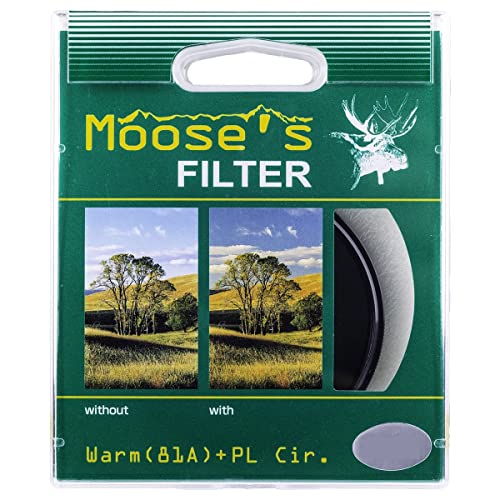
The Hoya Moose Peterson warming circular polarizer pairs a circular polarizer with 81A warming glass, so it cuts reflections and glare while adding a warm tone to the whole scene. The design comes from a collaboration between Hoya and wildlife photographer B. Moose Peterson, and it suits photographers who shoot animals, autumn landscapes, and golden-hour scenes where a warm cast flatters the subject.
The warming glass corrects the cool cast of open shade and overcast skies, which makes it useful for wildlife and nature work where the subject sits far away and haze softens the scene. The 72mm thread fits many popular telephoto and standard zoom lenses, and the rotating front ring lets you dial the effect up or down while looking through the viewfinder.
Specs
- Filter type: Circular polarizer with 81A warming glass
- Thread size: 72mm
- Model number: B72CIRPLWGB
- Glass: Hoya optical glass
- Design: Collaboration with wildlife photographer B. Moose Peterson
- Compatibility: Autofocus SLR and mirrorless cameras with 72mm filter threads
- Price grouping: Premium
2. PolarPro QuartzLine 37mm CP Circular Polarizer Filter
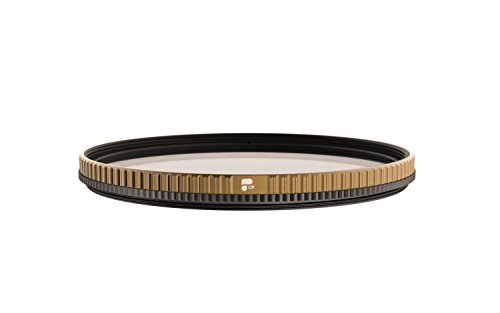
The PolarPro QuartzLine 37mm CP is built for a very different job from the full-size filters in this guide. It is a compact circular polarizer made for the DJI Inspire 2 and Olympus Zuiko lenses, where a standard 77mm filter would be far too large. Its glass is fused quartz rather than conventional optical glass, a material PolarPro chose for durability and optical clarity in demanding aerial conditions.
For drone pilots, a polarizer solves a real problem. Water, rooftops, and car roofs throw back harsh reflections from the air, and a polarizer cuts them while deepening color in the landscape below. The 37mm thread screws directly onto compatible Olympus Zuiko lenses used with the Inspire 2, and multi-coating helps control internal reflections and ghosting when the sun sits near the edge of the frame.
Specs
- Filter type: Circular polarizer
- Thread size: 37mm
- Model number: 37-CP
- Glass: Fused quartz
- Coating: Multi-coated
- Compatibility: DJI Inspire 2 and Olympus Zuiko lenses with 37mm threads
- Price grouping: Premium
3. Urth 77mm Circular Polarizing CPL Lens Filter

The Urth 77mm CPL is the most broadly useful filter in this guide. The 77mm thread is the standard size for many professional zooms, including popular 24-70mm and 70-200mm lenses, so one filter can serve several lenses with the help of step-up rings for smaller threads. Urth builds it from multi-coated optical glass in a slim frame, a combination aimed at keeping image quality high while avoiding vignetting on wide-angle lenses.
Out in the field, this filter does the classic polarizer jobs well. It deepens blue skies at an angle to the sun, cuts glare from wet rock and foliage, and brings out color in shallow water. The slim profile matters most on wide zooms, where a thick filter ring can darken the corners of the frame, and the multi-coating helps keep flare under control when shooting toward bright light.
Specs
- Filter type: Circular polarizer
- Thread size: 77mm
- Model number: FK40M6P1P
- Glass: Multi-coated optical glass
- Frame: Slim design for wide-angle use
- Compatibility: Lenses with 77mm filter threads, plus smaller lenses with step-up rings
- Price grouping: Mid-range
4. K&F Concept 77mm Magnetic 5-in-1 Lens Filter Kit
The K&F Concept magnetic 5-in-1 kit takes a different approach: instead of a single screw-in filter, it gives you a small system. The kit includes a magnetic CPL filter, ND8 and ND64 neutral density filters, a magnetic adapter ring, and a lens cap, all in the Nano-X series. Once the adapter ring is threaded onto the lens, each filter snaps on magnetically, so swapping between a polarizer and a neutral density filter takes seconds.
That speed is the real selling point. Landscape photographers often want a polarizer for glare and an ND filter for longer exposures in the same session, and this kit covers both without carrying two separate screw-in filters. The filters use 28 multi-layer coatings on optical glass, with waterproof and scratch-resistant treatments, and the whole set travels in a waterproof pouch.
Specs
- Filter type: Magnetic circular polarizer, part of a 5-in-1 kit
- Thread size: 77mm
- Kit contents: CPL filter, ND8 filter, ND64 filter, magnetic adapter ring, lens cap
- Series: Nano-X
- Glass: Optical glass with 28 multi-layer coatings
- Mounting: Magnetic quick-swap system
- Price grouping: Mid-range
5. K&F Concept 77mm Variable ND2-32 and CPL 2-in-1 Filter
The K&F Concept variable ND2-32 and CPL 2-in-1 filter combines two tools into one rotating unit. One element provides variable neutral density from ND2 to ND32, while the other provides circular polarization, so a single filter can darken the scene for motion blur and cut reflections at the same time. The frame is self-locking, which is designed to prevent accidental changes to the density setting while you shoot.
This combination suits photographers and videographers who work fast and travel light. A video shooter can hold a cinematic shutter speed in bright daylight while taming reflections on water or glass, and a stills photographer can blur a waterfall without stacking two filters and risking vignetting. The Nano-X series construction uses multi-coated optical glass.
Specs
- Filter type: Variable neutral density ND2-ND32 combined with circular polarizer
- Thread size: 77mm
- Model number: KF01.1087
- Series: Nano-X
- Glass: Multi-coated optical glass
- Frame: Self-locking, designed to prevent accidental setting changes
- Price grouping: Budget
How to Choose a Circular Polarizer Filter
Start with thread size, because nothing else matters if the filter does not fit. Check the number printed on the front of the lens or inside the lens cap, usually marked with a diameter symbol followed by a number such as 77. If you own several lenses with different thread sizes, buy the filter for your largest lens and use step-up rings for the smaller ones, which is cheaper than buying a polarizer for every lens.
Next, weigh glass and coating against frame thickness. Multi-coated glass resists flare and ghosting better than uncoated glass, and a slim frame reduces the risk of dark corners on wide-angle lenses. Brass frames resist binding better than aluminum, while magnetic systems trade a slightly larger front profile for much faster filter changes.
Finally, think about whether you need a pure polarizer or a combination filter. A dedicated polarizer gives the cleanest result and the thinnest profile, which suits landscape photographers who use it on its own. A 2-in-1 ND and CPL filter suits video work and long-exposure photography where both effects are needed together.
Who Should Skip a Circular Polarizer
A circular polarizer is not useful in every situation, and some photographers can safely skip it. If you shoot mostly indoors, in studios, or at night, there is little polarized light to cut, and the filter will only reduce the light reaching the sensor. Portrait photographers who rely on wide apertures in dim rooms will also find it gets in the way more than it helps.
You should also skip a polarizer when you need every bit of light. A polarizer typically costs one to two stops of exposure, so in dark forests, at dawn, or under heavy cloud, it can force slower shutter speeds or higher sensitivity settings that hurt image quality. Ultra-wide lenses can show uneven skies with a polarizer, since the effect varies across a very wide field of view.
Frequently Asked Questions
What does a circular polarizer filter do?
A circular polarizer filter blocks polarized light reflected from non-metallic surfaces such as water, glass, and wet leaves. That reduces glare, deepens blue skies, increases color saturation, and improves contrast in outdoor scenes. The effect is strongest when the sun sits at roughly a right angle to the direction you are shooting.
Do I need a circular polarizer or a linear polarizer?
Modern cameras need a circular polarizer. A linear polarizer can confuse autofocus and through-the-lens metering systems, which rely on a beam splitter that polarized light disrupts. A circular polarizer adds a quarter-wave layer that restores normal function. Every filter in this guide is a circular polarizer.
What size circular polarizer filter should I buy?
Buy the size that matches the filter thread of your largest lens, and use step-up rings to fit it on smaller lenses. The thread size is printed on the front of the lens or inside the lens cap, next to a diameter symbol. The 77mm size in this guide fits many professional zoom lenses, while smaller sizes suit compact primes and drone lenses.
Can I stack a circular polarizer with other filters?
You can, but stacking adds glass in front of the lens and increases the risk of vignetting, flare, and soft corners, especially on wide-angle lenses. A slim-frame polarizer stacks better than a thick one. Combination filters that merge a polarizer with neutral density in a single unit avoid stacking entirely.
Final Verdict
The best circular polarizer filter for most photographers is the Urth 77mm CPL, because it covers the most common professional thread size with multi-coated glass and a slim frame at a mid-range grouping. Wildlife photographers who like warm color will get more from the Hoya Moose Peterson warming polarizer, and DJI Inspire 2 pilots have a clear answer in the PolarPro QuartzLine 37mm CP. If you want a flexible system rather than a single filter, the K&F Concept magnetic kit covers polarizing and neutral density in one pouch, while the K&F Concept 2-in-1 suits shooters who need both effects in a single rotating filter.

FAQ
What does a circular polarizer filter do?
Do I need a circular polarizer or a linear polarizer?
What size circular polarizer filter should I buy?
Can I stack a circular polarizer with other filters?
More from Amazon
Programs that pair well with the guide above. Offers and eligibility are set by Amazon and may change.
A free business account with business pricing and bulk-buying tools for work, shop or home office.
Create a business accountFree shipping on eligible items, Prime Video and more. Eligible new members can start with a free trial.
Start a Prime free trialAudiobooks and podcasts to listen to on the go. Eligible new members can start with a free trial.
Try Audible freeAd-free music streaming. Eligible new subscribers can start with a free trial.
Try Music Unlimited freeAs an Amazon Associate we earn from qualifying purchases.

Write Your Review
No reviews yet. Be the first to share your experience!