
Key takeaways
- Compare balance pads by sizes, densities and surfaces, with the bare-feet-first rule and rail-within-reach habit home rehab and training rely on.
Disclosure: As an Amazon Associate, I earn from qualifying purchases. Product details were verified at the time of writing.
A balance pad is a slab of closed-cell foam, usually two to two and a half inches thick, that gives a little under your weight. That give is the whole point: standing on it, the small muscles around your ankles, knees and hips keep making tiny corrections, and that quiet work is what builds steadiness. Foam pads are the gentlest unstable surface there is — gentler than an inflatable disc, much gentler than a wobble board — which is why they are the usual starting point for ankle and knee rehab and for older adults working on balance at home. Every pad in this guide is solid closed-cell foam. Inflatable discs are a different product with a different feel, and none appears here.
One rule comes before the first step onto any pad: go barefoot first. Bare feet grip the foam and, just as important, they feel it — the pressure feedback through your soles is a large part of what your balance system learns from. Socks slide on foam, and a sliding foot on an unstable surface is how a balance drill turns into a fall. If a clinician wants you in shoes for a specific exercise, that instruction wins; otherwise, bare feet are the default.
The second rule is about what stands next to the pad: a rail, wall, counter or sturdy chair within reach for every session, from the first day to the last. Balance work is supposed to challenge you, and a challenge you cannot catch yourself from is just a hazard. Set up beside something you can grab without leaning, and keep it there even when the drills start to feel easy. The third rule is about the floor: the pad goes on a flat, dry floor, never on a rug edge and never near stairs — and never stacked on a second pad to make the work harder. Stacked foam shifts sideways under load in a way a single pad never does. When one pad feels easy, the honest progression is a softer pad, a narrower stance or one foot, not a taller stack.
The last framing matters most for rehab readers: the pad is a surface, not a program. If you are recovering from an injury or surgery, the exercises, the order and the pace belong to your clinician’s plan. A pad simply gives that plan an unstable surface to happen on. Anyone at risk of falling should check in with a doctor or physical therapist before starting balance work on their own.
Our top picks
How to Choose a Balance Pad
Size. Standard pads run about 15 to 16 inches long and 12 to 13 inches wide — enough for two feet side by side in a close stance, or one foot with room to spare. Pads around 19 to 20 inches long open up wide stances, kneeling on both knees, planks and push-up variations, and give nervous beginners more landing room. Narrow oval trainers are built for one foot at a time and suit single-leg drills only.
Density and thickness. Softer is harder, not easier: the deeper the foam sinks, the more correcting your body has to do. Firm and medium foam suits beginners, older adults and early rehab. Extra-soft pads are a later step, for people who already stand steadily on a firm one. Thickness runs from about 2 to 2.5 inches, and thicker foam usually sinks more, but density matters more than the number — two pads of the same thickness can feel very different.
Foam and surface. Closed-cell foam is the standard worth holding out for: it does not soak up sweat, it rinses or wipes clean, and it does not hold odours. A textured top face grips bare feet; a textured underside helps the pad stay put on wood and tile. Latex-free foam matters for anyone with a latex allergy, and some makers state it plainly. Look for edges that lie flat rather than curling — a curling edge is a trip point at exactly the moment you step on or off.
Care and storage. Wipe or wash with mild soap and water, air dry, and store the pad flat, out of sun and heat, which warp foam over time. Put the pad away after every session: a pad left lying on the floor between workouts is a trip hazard in its own right.
1. ProsourceFit Exercise Balance Pad
The straightforward home pick. The ProsourceFit pad is a standard-size rectangle of closed-cell TPE foam with a textured surface that stays grippy under bare feet, and a middle-of-the-road give that makes the small muscles in your feet and hips work without dumping you off the side. It is light enough — twelve ounces — to carry from room to room or take along to a clinic appointment, and it washes with mild soap and air dries. The honest limit is width: the top is a bit narrow for kneeling on both knees or a wide two-foot stance, so treat it as a standing and single-leg pad first.
Specs
- Size: 15.5 x 12.75 x 2.25 in
- Foam: Closed-cell TPE
- Surface: Textured, non-slip
- Weight: 12 oz
- Use: Standing drills, single-leg work, ankle rehab
- ASIN: B0766565HG
2. Airex Balance Pad Elite
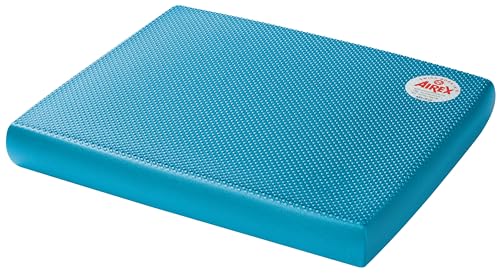
The clinic standard that home pads are measured against. Airex builds the Elite from closed-cell cross-linked foam with an integrally molded skin, so sweat stays on the surface instead of soaking in, and the pad rinses clean and dries fast. The waffle texture runs on both faces — grip for your feet on top, grip against the floor underneath — and the edges are made to lie flat rather than curl. You sink in deeply on this foam, so ankles, knees and hips correct constantly; that depth is exactly why therapy clinics use it daily, and why it is a demanding first pad for a fresh injury. The footprint is generous: wide stances, kneeling and push-up variations all fit.
Specs
- Size: 19.7 x 15.8 x 2.4 in
- Foam: Closed-cell cross-linked foam, molded skin
- Surface: Waffle texture on both faces
- Latex-free: Yes, per maker
- Use: Clinic and home rehab, wide stances, kneeling
- ASIN: B00CRU78RO
3. Yes4All Balance Pad, XL

The roomy option. The Yes4All XL stretches the standard rectangle to 19 by 15 inches, which is the size to choose if you want kneeling, wide stances and two-footed squats on one pad, or simply more landing room while your confidence builds. The TPE foam is on the dense, stiff side, so the sink is mild and the wobble gentle — a combination that suits beginners and older adults better than athletes chasing a challenge. The textured surface grips bare feet, and the pad doubles as a kneeler for floor work when it is not being stood on. Pick the XL footprint over the smaller Large if your stance is wide or your knees will spend time on it.
Specs
- Size: 19 x 15 x 2.25 in (XL)
- Foam: TPE, dense feel
- Surface: Textured, non-slip
- Weight: 1.5 lb
- Use: Wide stances, kneeling, beginner balance work
- ASIN: B077XSFQZW
4. Vive Balance Pad

The rehab-aimed pad. Vive designs this one for seniors and people coming back from surgery, and the details match that brief: latex-free foam for sensitive users, texture on both faces so the underside holds its place on smooth wood or tile while the top grips your feet, and a published maker figure of 300 lb for the pad under a standing user. Vive backs it with a 60-day guarantee. The top is sized for a narrow stance, so two-knee kneeling feels cramped; read it as a standing pad for steady, supported practice next to a counter, which is precisely the job it was shaped for.
Specs
- Foam: Latex-free, closed-cell
- Surface: Textured on both faces
- Maker figure: 300 lb
- Guarantee: 60 days, per maker
- Use: Standing rehab practice, older adults
- ASIN: B07CP256RF
5. TheraBand Stability Trainer, Advanced (Black)

The progression step. TheraBand colours its oval Stability Trainers by level — green is firm, blue is the middle step, and this black trainer is extra soft, the advanced end of the line. The oval is narrow by design: it fits one foot, so the work is single-leg standing, ankle rehab progressions and controlled weight shifts rather than two-foot stances. You sink further into this foam than into any rectangular pad here, which is the point — it belongs in a routine after a firm pad has started to feel easy, not as a first surface after an injury. It is too narrow for kneeling, and beginners should start further down the colour line.
Specs
- Size: 17.25 x 10.13 x 2.5 in, oval
- Foam: Closed-cell, extra soft (advanced level)
- Level: Black — third step in the maker’s colour progression
- Weight: 1 lb
- Use: Single-leg drills, later-stage ankle rehab
- ASIN: B000T7EJNI
Using a Balance Pad Safely
The headline rules bear repeating because they decide whether the pad helps or hurts. Bare feet first — socks slide on foam. A rail, wall, counter or chair within reach for every session, with no exceptions for good days. The pad flat on a dry floor, away from rug edges and stairs, and never stacked on another pad. Start with short two-foot holds of about thirty seconds, and progress the way the foam invites you to: narrower stance, then one foot, then head turns, then eyes closed — each step only when the one before it is steady. If you are working through an injury, your clinician’s plan sets the exercises and the pace; the pad is only the surface underneath them. When the session ends, put the pad away. A pad left on the floor is something to trip over in the dark.
FAQ
Is a softer pad better for beginners?
No — softer is harder. Deep-sinking foam demands constant correction, so beginners and early rehab do better on firm or medium foam, moving softer only when the firm pad feels easy.
Can I wear shoes on a balance pad?
You can, and some clinicians ask for it for specific drills. Bare feet remain the better default: they grip the foam instead of sliding, and the pressure feedback through your soles is part of the training.
How is a balance pad different from a balance disc?
A pad is solid closed-cell foam with a fixed give. A disc is inflatable — its feel changes with the air inside it — and it doubles as a seat cushion. Pads are steadier underfoot and the usual first step; discs come later.
How do I clean the pad?
Wipe it down or wash it with mild soap and water, let it air dry fully, and store it flat away from sun and heat. Closed-cell foam does not absorb sweat, so surface cleaning is genuinely enough.
When should I move to a softer pad or a single-leg stance?
When the current drill is steady for the full hold, several sessions in a row, with the support rail untouched. Change one thing at a time — stance or foam, not both — so you always know what made the work harder.
Verdict
For most home rehab and training, the ProsourceFit pad covers the ground: standard size, honest middle-density foam, light enough to carry anywhere. Choose the Airex Elite if the pad will see daily clinic-style use and you want the deepest, most durable foam here. Take the Yes4All XL for room — wide stances and kneeling — the Vive for supported standing practice with a latex-free surface, and the black TheraBand trainer when a firm pad has gone easy and single-leg work is the next step. Whichever you choose, the rules do the real work: bare feet, support within reach, one pad flat on a dry floor.
More from Amazon
Programs that pair well with the guide above. Offers and eligibility are set by Amazon and may change.
A free business account with business pricing and bulk-buying tools for work, shop or home office.
Create a business accountFree shipping on eligible items, Prime Video and more. Eligible new members can start with a free trial.
Start a Prime free trialAudiobooks and podcasts to listen to on the go. Eligible new members can start with a free trial.
Try Audible freeAd-free music streaming. Eligible new subscribers can start with a free trial.
Try Music Unlimited freeAs an Amazon Associate we earn from qualifying purchases.





Write Your Review
No reviews yet. Be the first to share your experience!