
Key takeaways
- Compare pull-up bars by doorway fits, mounts and grip positions, with the frame-check-before-hanging rule and controlled-rep habit lifters use.
A doorway pull-up bar is the smallest serious piece of home gym equipment there is: it hangs in a frame you already own, comes down in seconds, and asks for no floor space at all. The five picks below hold on three different ways — leverage over the trim, friction inside the frame, and one set of screw-in brackets — and that mounting choice, more than grip count or headline figures, decides whether a bar suits your home. Four of the five need no drilling at all; the fifth is included honestly as the fixed option for owners who would rather have a bar that never comes down.
Disclosure: As an Amazon Associate, I earn from qualifying purchases. Product details were verified at the time of writing.
Our top picks
How to Choose a Pull-Up Bar
Check the frame first, then load-test the bar before the first full rep. This is the headline rule of the whole category. A leverage bar is only as strong as the trim it presses against, so before any bar goes up, push and pull on the door trim itself: it should feel like part of the wall, with no flex, no cracks, no soft or hollow sections and no loose paint. Then hang the bar and load-test it with a partial hang — feet still on the floor, taking more of your weight in stages, checking for any shift, creak or slip — before the first full rep. A bar or a frame that moves during the test does not get used. Repeat the check every time the bar goes back up.
Measure the doorway against the maker’s fit range before ordering. Width is the obvious measurement, but trim depth and trim shape matter just as much for leverage bars: the makers below state fit ranges from 24 to 39 inches of width, and a frame outside the range is a frame the bar was not built for. Friction-fit bars add a harder condition — the Sportneer pick works only in solid wood frames. If your doorway has no trim at all, leverage bars have nothing to rest on, and a friction or bracket bar is the honest answer.
Know the three mounts. Leverage bars hook over the trim and use your own bodyweight to press tight; they install and come down in seconds and leave the frame untouched, which is why renters choose them. Friction bars expand inside the opening and grip the frame sides with pads and a locking mechanism — no trim needed, but the frame itself takes the pressure. Screw-in bracket bars fix the brackets to the frame once and stay put; they are the firmest feel of the three and the only style here that leaves holes behind.
Grip positions change the training. A plain straight bar gives one overhand and one underhand grip. The multi-grip frames below add wide and neutral (palms-facing) positions, which are easier on shoulders and elbows for many lifters and let one bar cover pull-ups, chin-ups and neutral-grip work. Count the positions you will actually use; foam padding on the grips you use most matters more than a sixth position you never touch.
Treat the maker’s weight figure as a ceiling with room to spare. Every figure in this guide is the maker’s own published limit, stated plainly. A controlled rep loads the bar with roughly your bodyweight; a sloppy, swinging rep loads it with much more. Staying comfortably under the figure is part of the controlled-rep habit — dead-hang start, smooth pull, smooth lower, no bounce at the bottom.
No kipping or swinging on a leverage bar. Leverage and friction bars hold because the load pulls straight down. Kipping, swinging and leg-kicking change the direction of the force and can shift or unseat a bar that feels rock solid during strict reps. These bars are built for strict, controlled work. Keep the floor below clear, land on something soft rather than concrete where you can, and step down from the bar instead of dropping off it.
Check the recall list before you hang. This category has a real recall history, and none of the picks below is on it. In February 2011 the CPSC recalled about 7,000 Perfect Pullup bars — an older, discontinued Perfect Fitness model on screw-in holders, made in 2007–2008 — because its plastic handles could crack and drop the user. That is a different product from the Perfect Fitness Multi-Gym in this guide, which is a leverage bar with padded steel handles. If you ever buy a doorway bar second-hand, match the exact model against the CPSC recall notices before the first hang.
1. Iron Gym Total Upper Body Workout Bar

The Iron Gym is the classic leverage bar and the default first purchase in this category. It hooks over the door trim, your bodyweight presses the padded bracket tight against the frame, and the whole thing comes off again in seconds so the doorway goes back to normal after every session. Three grip positions — wide, narrow and neutral — cover the main pull-up variations, and the foam handgrips stay comfortable through long sets. Taken down, it also works on the floor for push-ups, dips and sit-ups. Its limits are plain: it needs trim around the opening to hang from, so trimless frames are out, and the maker’s fit range tops out at 32 inches of doorway width.
Specs
- Mount: leverage fit over the door trim, no screws
- Door width fit: 24 to 32 in
- Grip positions: 3 (wide, narrow, neutral)
- Build: steel with foam grips
- Maker weight figure: 300 lb
- Floor use: push-ups, dips and sit-ups with the bar removed
2. Perfect Fitness Multi-Gym
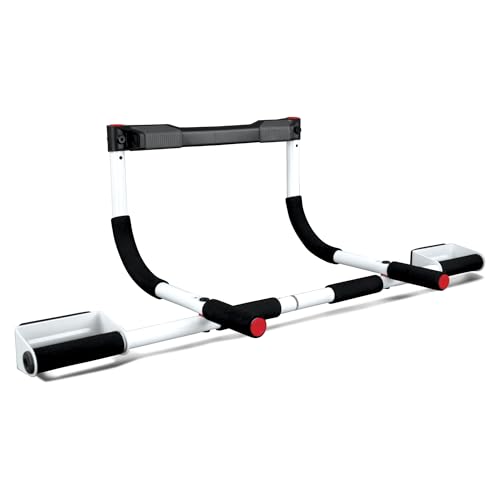
The Multi-Gym is the leverage bar for lifters who want the doorway and the floor covered by one kit. In the frame it offers padded handles in close, hammer (neutral) and wide positions, and a door frame guard spreads the load across the trim instead of concentrating it at two contact points. Flipped over and set on the floor, the same frame works for sit-ups, push-ups and dips. It fits a slightly larger span of doorways than the Iron Gym, up to 35 inches. The trade-off is assembly: there are more parts to fit and check than on a plain bar, so the partial-hang load test matters even more here, and it is slower to take down between sessions.
Specs
- Mount: leverage fit with a door frame guard
- Door width fit: 27 to 35 in
- Grip positions: close, hammer and wide, all padded
- Build: metal frame with padded handles
- Maker weight figure: 300 lb
- Floor use: sit-ups, push-ups and dips with the frame flipped over
3. Sportneer Pull Up Bar

The Sportneer is the friction-fit pick, built for doorways where a leverage bar will not work. Instead of hooking over the trim, it expands inside the opening: two PVC mats press against the frame sides and a dual gear lock holds the chosen width, so there is nothing to drill and no trim needed. It covers the widest openings in this guide, from 29.5 to 37 inches. The condition is strict and stated by the maker: it works only in solid wood frames, and the pressure pads can lift paint when the bar comes off, so hollow, plastic or painted trim rules it out. On a bare, solid wood frame it is the firmest no-drill hold here — and the frame check and staged load test apply to it exactly as they do to the leverage bars.
Specs
- Mount: friction fit inside the frame, no drilling
- Door width fit: 29.5 to 37 in
- Frame requirement: solid wood only
- Locking: dual gear lock with two PVC pressure mats
- Build: alloy steel with PVC mats
- Maker weight figure: 298 lb
4. Ultimate Body Press XL Doorway Pull-Up Bar

The XL solves the problem taller lifters know well: on a standard leverage bar the grip sits level with the top of the trim, so long arms run out of room at the top of the rep. This bar raises the grip above the trim and out from the wall, giving a fuller range of motion and clearance for your head and knees through the pull. It fits the widest span of standard doorways here, 24 to 36 inches, and heavy steel tubing with ABS couplers keeps the frame rigid. The honest trade-offs are weight and effort: at 10.2 lb it is the heaviest bar in this guide to hang and take down, so it suits a doorway where it can stay up between sessions rather than one it must clear after every workout.
Specs
- Mount: leverage fit, no drilling
- Door width fit: 24 to 36 in
- Grip position: elevated bar, raised above the trim line
- Build: steel tubing with ABS couplers and high-density foam grips
- Unit weight: 10.2 lb
- Maker weight figure: 300 lb
5. ProsourceFit Doorway Pull-Up Bar
The ProsourceFit is the one pick in this guide that uses screws, and it earns its place for a specific doorway: the extra-wide one. Its extendable rod reaches openings up to 39 inches — wider than any leverage or friction bar here — and the included brackets screw into the frame so the bar stays fixed and firm instead of being hung and removed daily. Two cushioned foam grips keep the hold simple. Be clear about the trade before choosing it: the screw holes stay in the frame when the bar comes off, so this is an owner’s bar, not a renter’s, and its maker weight figure of 220 lb is the lowest in this guide, which suits lighter lifters. For a wide doorway and a lighter lifter who wants a bar that is simply always there, nothing else on this list does the same job.
Specs
- Mount: doorway screw-mount with included brackets
- Door width fit: 24 to 39 in, extendable rod
- Grip: single bar with two cushioned foam grips
- Build: alloy steel with foam grips
- Maker weight figure: 220 lb
- Note: brackets fix permanently; screw holes remain after removal
Verdict
For most homes the Iron Gym is the right first bar: proven, quick on and off, and wide enough in its fit range for standard doorways. Choose the Perfect Fitness Multi-Gym if floor work matters as much as the hanging work, the Sportneer if your frame is solid wood and too wide or too plain for a leverage bar, and the Ultimate Body Press XL if you are tall enough to need the raised grip. The ProsourceFit is the deliberate exception — the bar for an owner with an extra-wide doorway who accepts screws in exchange for a fixed, always-ready setup. Whichever you hang, the routine does not change: solid trim checked by hand, a staged partial hang before the first full rep, strict controlled reps with no swinging, and a clear, soft landing below.
FAQ
Will a leverage bar damage my door trim?
The contact pads spread the load, and on sound, solid trim a leverage bar in strict use leaves the frame as it found it. Cracked, hollow or soft trim is a different story — that is what the frame check is for, and a frame that flexes under hand pressure should not hold a bar at all.
Can I do kipping pull-ups on a doorway bar?
No. Kipping and swinging change the direction of the load and can shift or unseat leverage and friction bars. Every bar in this guide is for strict reps: dead-hang start, controlled pull, controlled lower.
My doorway has no trim. Which picks still work?
The Sportneer, which grips inside the opening and needs solid wood frame sides, and the ProsourceFit, whose brackets screw into the frame. The three leverage bars all need trim to hang from.
How do I know the bar is safe before my first full set?
Hang it, then take your weight in stages with your feet still on the floor — a quarter, a half, then nearly all of it — watching and listening for any shift, creak or slip at each stage. Only a bar that stays perfectly still through the staged hang earns a full rep, and the check repeats every time the bar goes back up.
More from Amazon
Programs that pair well with the guide above. Offers and eligibility are set by Amazon and may change.
A free business account with business pricing and bulk-buying tools for work, shop or home office.
Create a business accountFree shipping on eligible items, Prime Video and more. Eligible new members can start with a free trial.
Start a Prime free trialAudiobooks and podcasts to listen to on the go. Eligible new members can start with a free trial.
Try Audible freeAd-free music streaming. Eligible new subscribers can start with a free trial.
Try Music Unlimited freeAs an Amazon Associate we earn from qualifying purchases.







Write Your Review
No reviews yet. Be the first to share your experience!