
Key takeaways
- Find the best LED panel light for photography and video, from compact on-camera panels to powerful RGB studio lights for portraits and streaming.
A flat LED panel light is one of the most useful tools a photographer or video creator can own. It spreads soft, even light across a face, a product, or a small set without the hard shadows that a bare bulb or a small on-camera flash creates. Because the light comes from a wide surface rather than a single point, skin looks smoother and product surfaces show fewer harsh reflections.
The best LED panel light for most people balances brightness, color accuracy, and control. A high color rendering index keeps skin tones and product colors true to life, adjustable color temperature lets the panel match daylight or warm indoor light, and dimming lets you shape the light instead of fighting it. The five panels below cover every common use, from a pocketable fill light on a camera hot shoe to a full-size RGB studio panel with app control.
As an Amazon Associate, we earn from qualifying purchases.
Our top picks
Best for: Studio portraits, streaming, and creative video lighting
Check price on AmazonBest for: Professional portraits, product photography, and interviews
Check price on AmazonBest for: On-camera fill, vlogging, and tabletop product shots
Check price on AmazonBest for: Background color, fill light, and streaming setups
Check price on AmazonBest for: Portraits, streaming, travel shoots, and video calls
Check price on AmazonQuick Answer
For most photographers and video creators, the NEEWER 660 PRO RGB is the best LED panel light because it combines strong 50W output, full RGB color, and app control in a proven studio panel. If you want a lighter panel with a built-in battery, the NEEWER NL-192AI is the better pick, while the ULANZI VL200 is the best compact option for on-camera fill.
1. NEEWER 660 PRO RGB LED Video Light
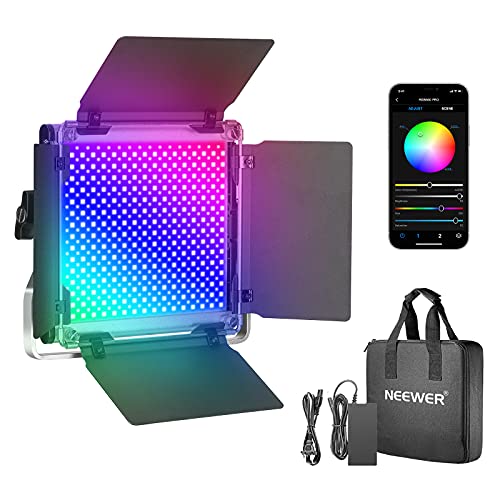
The NEEWER 660 PRO RGB is a full-size studio panel built for creators who want one light that can do almost everything. Its 660 LEDs mix cool white, warm white, and RGB diodes, so it works as a clean white key light for portraits and as a color light for creative backgrounds and streaming setups. The metal shell feels solid on a stand, and the included barn doors help shape the beam.
At 50W the panel puts out enough light to key a seated subject from a comfortable distance, and app control means you can change color, brightness, and effects without walking over to the light. It runs on AC power or NP-F batteries, so it works in a home studio and on location, though batteries are sold separately. Color accuracy is strong, with a CRI of 97 and above, and the 3200K to 5600K range covers warm tungsten light through daylight.
Specs
- Power: 50W with 660 SMD LEDs
- Color temperature: 3200K to 5600K, plus full RGB color
- Color accuracy: CRI 97 and above
- Brightness: 7,000 lux at 0.5 meters
- Control: App control, barn doors, and U bracket included
- Power source: AC adapter or NP-F batteries, sold separately
- Best for: Studio portraits, streaming, and creative video lighting
- Price group: Mid-range
2. Aputure amaran P60c RGBWW LED Panel Light

The amaran P60c is the most refined panel in this roundup, and it shows in the light quality. Aputure built this 60W RGBWW panel around a lensed LED array, which gives it more punch than its size suggests, and the color engine covers a very wide range from 2500K to 7500K.
What sets the P60c apart is control. The Sidus Link app gives you fine control over hue, saturation, and intensity, plus ten built-in lighting effects for video scenes. Green and magenta adjustment lets you correct for mixed lighting, a feature usually found on more expensive lights. The included softbox and grid soften the output for portraits. It is a premium choice, and the build and color fidelity justify that position for creators who earn from their work.
Specs
- Power: 60W RGBWW lensed LED panel
- Color temperature: 2500K to 7500K with green and magenta adjustment
- Color accuracy: CRI 95 and above, TLCI 96 and above
- Brightness: 5,900 lux at one meter
- Control: Sidus Link app control with 10 lighting effects
- Included: Softbox, grid, carrying case
- Best for: Professional portraits, product photography, and interviews
- Price group: Premium
3. ULANZI VL200 Bi-Color LED Video Light
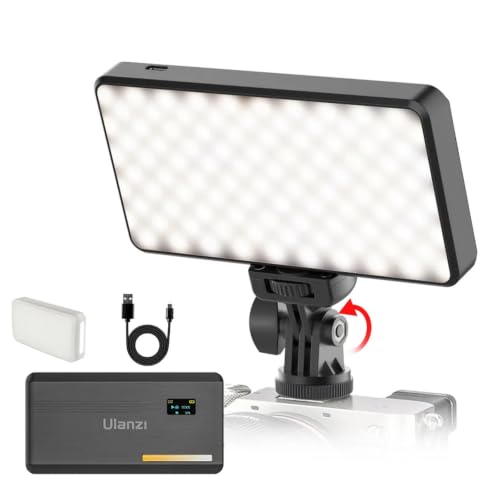
The ULANZI VL200 is the smallest panel here, and it earns its place by solving a different problem: fill light where a big panel cannot go. It mounts on a camera hot shoe, a small tripod, or a magic arm, and its built-in battery means no cables and no separate battery system. For vlogging, tabletop product shots, and close-up video calls, it is often all the light you need.
Despite its size, the VL200 is surprisingly flexible. The color temperature range runs from 2500K to 9000K, wider than most studio panels, so it can match warm lamps, cool daylight, and everything between. Two hundred LEDs split evenly between warm and cool give smooth color blending, and brightness adjusts from a faint glow to full power. The rear LCD shows brightness, color temperature, and battery life at a glance.
Specs
- Power: 8W with 200 LED beads
- Color temperature: 2500K to 9000K
- Color accuracy: CRI 95 and above
- Battery: Built-in 5000mAh battery with USB-C charging
- Runtime: Up to 2 hours at full brightness, up to 15 hours at low brightness
- Mounting: Cold shoe and quarter-inch thread, 182 grams
- Best for: On-camera fill, vlogging, and tabletop product shots
- Price group: Budget
4. GVM 800D RGB LED Video Light

The GVM 800D is a straightforward RGB studio panel that delivers color versatility at a friendly mid-range position. It covers the standard bi-color range from 3200K to 5600K for everyday white light, then adds full RGB color for creative backgrounds and accent lighting. App control lets you adjust brightness and color from your phone, which is handy when the panel is mounted high on a stand or behind a set.
Eight built-in scene modes cover common video looks, and the high CRI of 97 keeps skin tones looking natural as a key light. The panel ships with a U bracket for stand mounting, and its slim profile stores easily between shoots. For creators building a two or three light setup on a budget, the 800D is an easy second or third panel.
Specs
- Power: 40W RGB LED panel light
- Color temperature: 3200K to 5600K, plus full RGB color
- Color accuracy: CRI 97
- Control: App control with 8 scene lighting modes
- Mounting: U bracket; AC adapter included
- Best for: Background color, fill light, and streaming setups
- Price group: Mid-range
5. NEEWER NL-192AI 13-Inch LED Video Light Panel

The NEEWER NL-192AI is the best all-rounder for creators who want a large, soft light with a battery built in. The 13-inch panel holds 192 LEDs and produces a broad, even wash that flatters faces and evens out product shots. A built-in 8000mAh battery powers it for up to 90 minutes at full brightness, and the included tripod stand means it is ready to shoot straight out of the box.
At 20W it is bright enough to key a portrait or a video call, and the 2400 lux output at half a meter gives you real working brightness without a wall outlet nearby. The rear LCD shows color temperature, brightness, and battery level, and the panel charges over USB. Color temperature runs from 3200K to 5600K with a CRI of 97 and above, and the slim panel weighs about 580 grams.
Specs
- Power: 20W with 192 LEDs, 96 warm and 96 cool
- Color temperature: 3200K to 5600K
- Color accuracy: CRI 97 and above
- Brightness: 2400 lux at 0.5 meters
- Battery: Built-in 8000mAh battery with USB charging
- Included: Tripod stand, power adapter; 13-inch panel, about 580 grams
- Best for: Portraits, streaming, travel shoots, and video calls
- Price group: Mid-range
How to choose
Start with how you will use the panel most often. For a desk or a small home studio, a mid-size panel like the NL-192AI or the 660 PRO RGB gives you enough brightness to shape a scene without overwhelming the room. For on-camera work, vlogging, or travel, a compact battery-powered panel like the VL200 goes where a stand cannot.
Color accuracy matters more than raw brightness for photography. Look for a CRI of 95 or above, which all five panels here meet or exceed. Next, check the color temperature range: a wide range lets you match the room instead of fighting it, and RGB adds creative options for backgrounds.
Think about power before you buy. Battery-powered panels are freeing on location but need recharging, while AC-powered panels run all day in a studio. App control is worth having if you shoot alone.
Who should skip
Skip a flat LED panel if your main need is a hard, focused light for long-distance work, such as lighting a subject across a large hall. Panels are built for soft, even coverage at close to medium range, and a monolight or a COB spotlight will serve those jobs better.
You can also skip this category if you already own a good ring light and only shoot straight-on talking-head video. Photographers who work only with flash may not need a continuous panel either, unless they also shoot video.
Frequently Asked Questions
What is the difference between an LED panel light and a monolight?
An LED panel light spreads light from a wide, flat surface, creating soft shadows and even coverage at close range. A monolight concentrates light from a single point source, which is brighter over distance and takes modifiers like softboxes. Panels suit portraits, products, and video; monolights suit larger sets.
How bright should an LED panel light be for video?
For a talking-head video or a portrait at arm’s length, a panel in the 20W to 50W range is usually enough when placed a meter or two from the subject. Brighter panels give you more room to work in larger spaces and to overpower window light. Dimming matters as much as peak output, since most indoor shoots use well under full power.
Do I need RGB, or is bi-color enough?
Bi-color is enough if you only need clean white light for portraits, products, and interviews. RGB is worth having if you shoot creative video, stream with colored backgrounds, or want accent lighting without buying gels.
Can an LED panel light replace a flash for photography?
For still life, products, and portraits at close range, a bright continuous panel can replace a flash, and you see the light before you shoot. For freezing fast motion or overpowering bright sunlight, a flash still wins.
Final verdict
The best LED panel light depends on where and how you shoot, but the NEEWER 660 PRO RGB is the strongest overall choice for a home studio, thanks to its 50W output, full RGB color, and app control. The amaran P60c is the pick for professional work where color fidelity justifies a premium panel. For portability, the NEEWER NL-192AI covers the most ground with its built-in battery and stand, while the ULANZI VL200 is the best compact fill light for cameras and travel. The GVM 800D rounds out the set as a capable RGB panel for backgrounds and fill.
FAQ
What is the difference between an LED panel light and a monolight?
How bright should an LED panel light be for video?
Do I need RGB, or is bi-color enough?
Can an LED panel light replace a flash for photography?
More from Amazon
Programs that pair well with the guide above. Offers and eligibility are set by Amazon and may change.
A free business account with business pricing and bulk-buying tools for work, shop or home office.
Create a business accountFree shipping on eligible items, Prime Video and more. Eligible new members can start with a free trial.
Start a Prime free trialAudiobooks and podcasts to listen to on the go. Eligible new members can start with a free trial.
Try Audible freeAd-free music streaming. Eligible new subscribers can start with a free trial.
Try Music Unlimited freeAs an Amazon Associate we earn from qualifying purchases.





Write Your Review
No reviews yet. Be the first to share your experience!