
Key takeaways
- Compare cold plunge tubs by build style, size and insulation, with the start-with-short-dips rule and keep-it-covered habit for clean cold water.
A cold plunge tub is a deep, single-person tub built to hold cold water long enough for a short, deliberate dip after training or as a daily habit. The shelf splits into three builds. Portable framed pods stand on legs or support rods with layered, insulated walls and fold away when empty. Inflatable tubs use air rings or air walls, pack down smallest of all, and ask you to keep a pump nearby. Rigid tubs — hard plastic barrels and stock tanks — never fold, never puncture, and hold their shape for years of outdoor use. The five picks below cover all three builds, and each one is labelled with its build so you know exactly what arrives.
One boundary up front: every pick here is a tub. None of them bundles a chiller machine. You cool the water with ice, or you add a separate chiller later to the models whose makers allow one. If a listing shows a tub photographed beside a chiller, read the box contents twice — the machine is often a separate purchase, and this guide does not count it as part of the tub.
Disclosure: As an Amazon Associate, I earn from qualifying purchases. Product details were verified at the time of writing.
Our top picks
Read This First: Cold Water Is a Real Stress
Cold immersion is not a casual soak, and the honest safety rules matter more than any tub feature.
Begin with short dips and warmer water. For your first sessions, aim for water in the mid-50s Fahrenheit and one to two minutes, then build gradually over weeks. Colder and longer is a progression, never a first day.
Never plunge alone. Have another adult within earshot, every time. Sudden cold triggers an involuntary gasp and a spike in breathing and heart rate in the first moments, and that reaction is strongest exactly when a beginner is least ready for it. Keep your head above water, breathe out slowly as you settle in, and keep a towel and warm clothes within reach of the tub.
Talk to a clinician first if anything on this list applies to you: a heart condition, high or low blood pressure, circulation problems, fainting episodes, cold sensitivity, pregnancy, or medication that affects heart rate or blood pressure. Cold exposure is a genuine cardiovascular stress, and a tub is the wrong place to discover a problem.
Get out at once on warning signs. Dizziness, confusion, chest tightness, or numbness that does not ease after you move your fingers and toes means the session is over — climb out, dry off, and warm up gradually. Never combine a plunge with alcohol, and never turn breath-holding into part of the routine.
Keep the water covered and clean. A cover keeps debris, insects and neighbourhood animals out and slows warming between sessions. Change and clean the water on the maker’s schedule for your model, scrub the liner as directed, and never let standing water sit uncovered for weeks — a neglected tub becomes a hygiene problem, not a recovery tool.
How to Choose
Pick the build before the brand. Framed pods are the balanced default: quick to set up, insulated, and easy to drain. Inflatables pack down to a bag and suit renters and small patios, with the trade of softer walls and puncture care. Rigid tubs are the long-term outdoor answer and the easiest to clean, but they take a permanent footprint and arrive with no insulation unless you add your own.
Match the size to your body, not the headline. Gallon figures are maker figures measured to the brim; you will fill below that and displace water when you climb in. What decides comfort is the inside shape: round pods seat you upright with knees bent, ovals let taller users stretch their legs, and barrels trade leg room for a small footprint. If you are tall or broad, choose the shape first and the gallon number second.
Insulation and a cover decide your ice habit. Layered walls and a fitted cover slow warming between sessions, which means fewer bags of ice per week and water that stays in your target range longer. A thin single-wall tub in summer sun can drift out of range between morning and evening. Every pick below either includes a cover or, in the stock tank’s case, states plainly that none is in the box.
Check the drain before you fill anything. A full tub holds hundreds of pounds of water. A bottom drain valve with a hose lets you empty it where you choose; a tub with only a plug means tipping or siphoning. Plan where the water goes — away from foundations, and not onto a neighbour’s plot.
Respect the weight of filled water. Water weighs a little over eight pounds per gallon, so a filled 100-gallon tub plus a person passes a thousand pounds. Set any tub on ground, a patio slab, or a deck you are sure can carry that load, and never on an upstairs floor or balcony without professional advice.
Plan the cooling, then keep it simple. Ice-only tubs ask for a steady supply of bags and a freezer with room. Chiller-ready models add ports or fittings so a separate machine can hold a set temperature later. For two or three dips a week, ice in an insulated, covered tub is the pattern most home users keep up; daily plungers are the ones who eventually add the machine.
1. The Cold Pod Ice Bath Tub — the balanced first pod
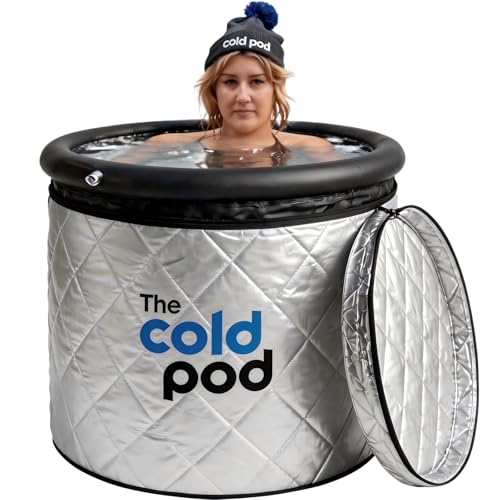
The Cold Pod is the default first plunge for most home users, and it earns that place by covering the basics in one box. The round pod holds an 85-gallon maker figure of water, stands on its own frame, and wraps the water in three layers: a PVC inner skin, a pearl foam insulation core, and a nylon outer shell. A fitted cover comes in the box, which is the detail cheaper pods most often leave out.
Setup is the other half of its appeal. The frame assembles without tools, the tub fills from a garden hose, and the whole thing folds down when empty if the patio has to go back to being a patio. It is an ice-only tub — the maker provides no chiller ports — so your cooling plan is bags of ice and the insulation doing its quiet work between sessions. Tall users should read the boundary honestly: at this size you sit upright with knees bent, and anyone well over six feet will feel the walls. For everyone else, this is the complete, no-drama beginning.
Specs
- ASIN: B0BTSRJ4MY
- Build: portable framed pod, round
- Capacity: 85 gallons (maker figure)
- Walls: PVC inner, pearl foam insulation core, nylon outer
- Cover: included
- Cooling: ice only; no chiller ports
- Use: indoor or outdoor, folds down when empty
2. Bubplay XL Cold Plunge Tub — the roomy round pod

Bubplay’s XL answers the one complaint round pods always draw: not enough room. Its 105-gallon maker figure and wider round body let most adults submerge to the shoulders, and the maker positions it for users up to 6 feet 7 inches tall. Eight stainless steel support rods hold the walls upright, and a six-layer wall build with a tough 210D outer fabric slows temperature drift between sessions.
The practical details are handled well. An inflatable top ring cushions your neck and arms at the rim, a bottom drain valve and included hose empty the tub without tipping, and the whole tub deflates and folds flat for storage. A cover is included. At under eight pounds empty, it is the easiest pick here to move, store, or take to a training partner’s yard — with the standing inflatable warning that sharp ground, pet claws and careless storage are its natural enemies, so use the ground sheet and keep the repair patch it ships with.
Specs
- ASIN: B0CSK9CK4X
- Build: portable framed pod, round XL, support-rod walls
- Capacity: 105 gallons (maker figure)
- Walls: six-layer insulation, 210D outer fabric
- Support: 8 stainless steel rods, inflatable top ring
- Drain: bottom drain valve with hose included
- Cover: included
- Weight: 7.7 lb empty; folds flat for storage
3. Jasonwell Heavy Duty Ice Bath Tub — the rugged barrel

Jasonwell’s entry is the barrel-format pick: a tall, narrow cylinder that trades leg room for the smallest footprint in this guide and a tougher brief than the lightest pods. The heavy-duty layered walls are built for outdoor seasons rather than occasional use, and the barrel shape keeps the water deep around your torso while you sit upright — the posture most recovery routines assume.
Because the tub inflates for setup and deflates for storage, it splits the difference between the framed pods and a rigid barrel: no frame hardware to assemble, softer walls than a hard tub, and a pack-down size a closet can absorb. The honest trade is entry and exit — a tall barrel wall is a step-over, and anyone with limited mobility should weigh that against the oval pick below. Model JX-IBTA-085BL is the listing to match when you order, since Jasonwell sells more than one tub under similar names.
Specs
- ASIN: B0CRL7JDD1
- Build: inflatable barrel-style tub
- Model: JX-IBTA-085BL
- Walls: heavy-duty multi-layer build
- Format: tall upright cylinder, small footprint
- Storage: deflates and folds when empty
- Use: outdoor cold plunges at home
4. Brisk Bear XL Oval Ice Bath Tub — the leg-room pick
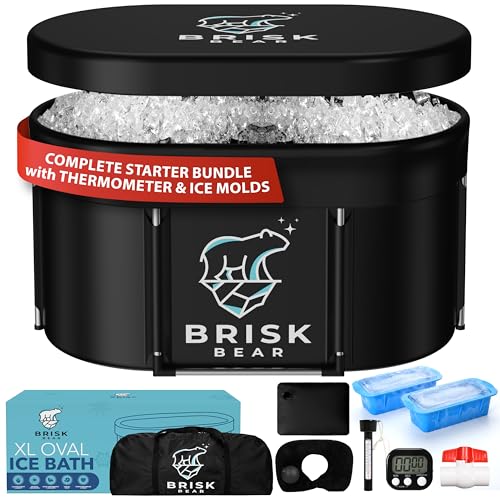
The Brisk Bear is the shape change in this lineup. Its oval footprint lets you sit with legs stretched forward instead of folded, which is the difference between relaxing into the cold and bracing against the tub. For taller users and anyone whose hips dislike narrow pods, that reclined posture is the whole argument.
A cover is included, and the portable build sets up and packs down like the other soft-wall picks. One honesty note: the maker does not publish a gallon figure for this model, so judge it by its footprint and your own height rather than a capacity headline — if a number matters to you, the two round pods above publish theirs. The oval also drinks more floor space than a round pod and takes more ice to bring down, the standing trade for leg room in every oval on the shelf.
Specs
- ASIN: B0CY8YQGBV
- Build: portable oval tub
- Capacity: no gallon figure published by the maker
- Shape: oval, legs-forward seated posture
- Cover: included
- Use: home plunges for taller users and larger frames
5. Rubbermaid Commercial Stock Tank, 100 Gallons — the rigid DIY route

The stock tank is the oldest trick in home cold plunging: a livestock tank, bought as a livestock tank, that happens to make a superb plunge tub. Rubbermaid’s 100-gallon model is seamless structural foam — molded polyethylene with no seams to split — and it shrugs off sun, frost and seasons of outdoor life that would age out a soft-wall tub. An oversized drain plug, an inch and a half across, empties it fast and makes scrubbing simple.
State the trade plainly, because it is real: this is a farm tank, not a plunge product. No lid is in the box, no insulation wraps the walls, and the wide, low shape (53 inches long, 31 wide, 25 deep) seats you reclined with legs out rather than upright. Owners add a floating cover or an insulated wrap themselves. In exchange you get the toughest, easiest-to-clean and longest-lived tub in this guide, and the one least likely to need replacing. If your plunge lives outdoors all year, this is the pick that treats that as normal.
Specs
- ASIN: B007IAFCC6
- Build: rigid stock tank, seamless structural foam (molded polyethylene)
- Capacity: 100 gallons
- Dimensions: 53 x 31 x 25 in
- Weight: 32.4 lb empty
- Drain: oversized 1-1/2 in drain plug
- Cover and insulation: none included — add your own
- Sold as: livestock feed and water tank, used as a DIY plunge tub
Verdict
Most people should begin with The Cold Pod: it is the complete package — insulated layered walls, a cover in the box, quick setup — in the size a first routine actually needs. If you are tall or broad and already know a standard pod will cramp you, the Bubplay XL keeps the same pod pattern and adds genuine shoulder room. The Jasonwell barrel suits small patios and users who want a tougher brief in a compact cylinder, while the Brisk Bear oval is the pick when leg room decides everything and you accept that its maker publishes no gallon figure. The Rubbermaid stock tank is the permanent outdoor answer: no cover, no insulation, no apologies, and a tub that will outlast every soft-wall pick here.
Whichever tub you choose, the routine matters more than the hardware. Begin warm and short, never plunge alone, keep the cover on between sessions, and change the water on schedule. A modest tub used three times a week beats a grand one gathering leaves.
FAQ
How cold should the water be?
Beginners do well in the mid-50s Fahrenheit for one to two minutes. Work down gradually over weeks if you want colder water; there is no prize for the lowest number, and the gasp reaction strengthens sharply as water drops toward the low 40s.
How often should I change the water?
Follow the maker’s schedule for your model, keep the cover on between sessions, and change the water sooner whenever it looks cloudy or the liner feels slick. A covered, cleaned tub keeps water usable far longer than an open one.
Can I add a chiller later?
Only to a tub whose maker provides ports or fittings for one. The Cold Pod is ice-only by design, and forcing fittings into a soft-wall tub it was never built for invites leaks. If a chiller is firmly in your future, buy the tub that welcomes one from the beginning.
Is a stock tank safe to plunge in?
The tank itself is a food-and-water-grade farm staple with smooth molded walls and no sharp edges, and it is the longest-running DIY option in the hobby. The same cold-water rules apply in full: never alone, begin short, and keep the water covered and changed on schedule.
More from Amazon
Programs that pair well with the guide above. Offers and eligibility are set by Amazon and may change.
A free business account with business pricing and bulk-buying tools for work, shop or home office.
Create a business accountFree shipping on eligible items, Prime Video and more. Eligible new members can start with a free trial.
Start a Prime free trialAudiobooks and podcasts to listen to on the go. Eligible new members can start with a free trial.
Try Audible freeAd-free music streaming. Eligible new subscribers can start with a free trial.
Try Music Unlimited freeAs an Amazon Associate we earn from qualifying purchases.





Write Your Review
No reviews yet. Be the first to share your experience!