
Key takeaways
- Compare wrist rollers by handle build, cord length and load pin, with the slow-roll rule and both-directions habit for forearms that grow evenly stronger.
A wrist roller is the simplest loaded forearm tool there is: a handle, a cord or strap hanging from its middle, and a pin or clip at the bottom that holds a weight plate. You grip the handle with both hands, roll the cord up until the plate reaches the bar, then unroll it under control. Rolling up works the forearm extensors on the back of the arm; lowering slowly works the flexors that also close your hand. It is a different tool from a hand gripper, which trains the squeeze alone with no rotation and no hanging load, and it has nothing in common with a wrist wrap, which is a support band worn around the joint. This guide covers five true rollers — handle, cord, and a pin or strap that takes real plates.
Disclosure: As an Amazon Associate, I earn from qualifying purchases. Product details were verified at the time of writing.
Four habits govern every pick below. First, roll slowly in both directions: the lowering half is half the exercise, so unroll under control instead of letting the plate spin down. Second, begin with a light plate — five pounds rolled through a full cord is humbling, and form breaks long before strength does. Third, check the cord and the pin before every loading: frayed webbing, a bent pin, or a worn clip is the failure point of the whole tool, and it fails with a plate in the air. Fourth, keep your elbows soft and your shoulders down while you roll; if your shoulders creep up to your ears, the forearms have stopped doing the work.
Our top picks
1. FitBeast Forearm Strengthener & Wrist Roller — the thick-handle all-rounder
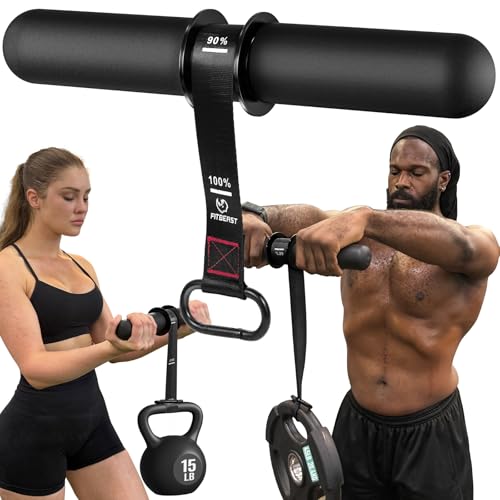
FitBeast builds its roller around handles that run about a quarter thicker than a standard bar, and that extra diameter is the point: a light plate stops feeling light when your fingers cannot settle into a lazy half-hold. The nylon strap is the other half of the design, holding up to 220 lb on the maker’s figure, with a 20.4-inch extension strap in the box so the plate can hang higher or rest on the floor between sets instead of dangling at shin height.
The package suits a home lifter who already owns plates and wants one roller that covers years of progress. The thicker grip does ask more of smaller hands on day one, so expect the first sessions to be as much finger work as forearm work. FitBeast backs the tool with a five-year warranty, the longest cover in this guide.
Specs
- Handle: non-slip, 25% thicker than a standard bar
- Strap: nylon, supports up to 220 lb
- Extension strap: 20.4 in, included
- Model: SBXLQ202401
- Warranty: 5 years
2. Vikingstrength Forearm Blaster — the fat grip with a chain

Vikingstrength swaps the usual webbing for hardware: a chain with two carabiners hangs from the bar alongside a 38-inch strap, so plates load and change without threading anything through a center hole. The handles are the headline — a patented thick grip measuring 6.18 inches around, which turns even a modest plate into a serious set because your fingers have to work simply to stay wrapped.
The build is stainless steel and the maker has tested the setup to 220 lb, well past what forearm work usually demands. Two honest trade-offs: a chain clinks and swings more than a strap, especially in a small room, and that single hook link carries the whole plate, so it earns a look before every set — exactly the cord-and-pin check this guide asks for anyway. An app with training programs is included under the maker’s V-Strength name.
Specs
- Handle: patented thick grips, 6.18 in circumference
- Loading: chain with two carabiners, plus 38 in strap
- Load figure: tested to 220 lb
- Build: stainless steel
- Item weight: 1.2 kg
3. DMoose Wrist Roller — the textured grip on a short strap

DMoose takes the opposite approach to cord length: a 35-inch nylon strap, shorter than most here, so the plate swings less and drags on the floor less in a crowded gym. The one-piece alloy steel core carries a rust-resistant coating, and the handles are textured rubber with a raised pattern that stays put when palms sweat — the detail your hands notice on the third set, not the first.
Loading runs through a pin that fits both 1-inch standard and 2-inch Olympic plates and handles up to 240 lb on the maker’s figure, the highest ceiling in this guide, with a carabiner for quick plate changes. The short strap is a deliberate trade: it needs the plate close under the bar, so lifters who like rolling from a high anchor should look at the longer cords elsewhere in this guide.
Specs
- Core: alloy steel with rust-resistant coating
- Handles: textured non-slip rubber
- Strap: 35 in nylon
- Loading pin: fits 1 in and 2 in plates, up to 240 lb
- Part number: FE-N-P
4. MuscleForge Wrist Roller — the pin-loaded compact

MuscleForge skips the hanging strap entirely. Its load pin — 13 cm long — slides straight through the plate and clips in place, and the pin accepts both 25 mm and 50 mm plates, so the same roller works with standard and Olympic sets without an adapter. With no webbing to thread, load changes are the fastest here, and the plate hangs close to the bar instead of swinging at the end of a long cord, which makes seated sets steadier.
The handles are foam at 1.25 inches across, a standard diameter that suits smaller hands better than the thick grips above. The maker’s load figure is 130 lb (60 kg), the lowest ceiling in this guide but still far beyond what most forearms will ever roll. No weights are included; the clip also lets a kettlebell or a loaded backpack hang from the pin when plates are not handy.
Specs
- Build: alloy steel
- Handles: foam, 1.25 in diameter
- Load pin: 13 cm, fits 25 mm and 50 mm plates
- Load figure: up to 130 lb (60 kg)
- Part number: KF-98
5. RIQIGA Forearm Strengthener and Wrist Roller — two strap lengths in the box
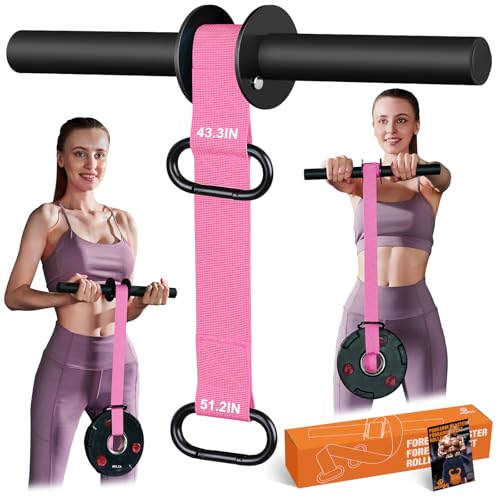
RIQIGA answers the anchor-height problem by shipping both strap lengths: a 43.3-inch strap that keeps the plate close for low setups and seated work, and a 51.2-inch strap for rolling from a higher bar. A quick-locking mechanism handles the swap and the plate attachment, so changing lengths feels deliberate rather than fiddly.
The core is alloy steel with foam-covered handles, and the nylon webbing supports up to 120 lb on the maker’s figure — enough headroom for steady progress, though heavy rollers should note it is the second-lowest ceiling here. This pick comes in pink, and the foam grips are the comfort story: kind on the palms through high-rep sets, worth a wipe and a buckle check before heavy ones.
Specs
- Core: alloy steel
- Handles: foam covered
- Straps: two nylon straps, 43.3 in and 51.2 in
- Load figure: up to 120 lb
- Locking: quick-lock mechanism
- Color: pink
How to Choose
Start with handle diameter, because it changes the exercise more than any load figure. A standard bar around 1.25 inches lets you roll heavier and suits smaller hands; a thick grip like the FitBeast or the Vikingstrength makes light plates productive and turns every set into finger work as well. If your grip quits before your forearms do, go thick; if you want to chase load, go standard.
Next, match the cord to the room. A short strap like the DMoose’s 35 inches swings less and suits a crowded gym or a low ceiling. A long strap, or the RIQIGA’s two-length set, gives room to roll from a pull-up bar or while standing tall. Pin loading, the MuscleForge route, removes the cord question altogether and keeps the plate tight to the bar.
Then check plate fit and headroom. Most pins and straps here take both 1-inch standard and 2-inch Olympic plates; the MuscleForge pin is sized in millimetres for the same two families. Every ceiling in this guide — 120 lb and up — sits far above sane wrist roller loads, so treat the figure as hardware headroom, not a target. Whatever you pick, keep the habits from the top of this guide: slow rolls both ways, light plates first, cord and pin inspected before loading, elbows soft and shoulders down.
One more note on scope: a roller trains rotation under load, which a gripper cannot, and a gripper trains the crushing squeeze in a way a roller only touches. The two tools sit side by side in a complete grip routine rather than replacing each other.
Verdict
For most home lifters, the FitBeast is the default: thick handles that make light plates honest work, a strong strap with an extension in the box, and the longest warranty here. The Vikingstrength is the pick for lifters who want gym hardware — a fat grip and a chain that loads fast — and do not mind checking a hook before each set. The DMoose suits sweaty hands and tight spaces with its textured grip and short strap. The MuscleForge is the compact, pin-loaded option for fast changes between plates, and the RIQIGA covers two anchor heights with its pair of straps. Pick by handle and room first; the forearms will not care which logo is on the bar.
FAQ
How much weight should a beginner hang from a wrist roller?
Less than pride suggests. Begin with a 2.5 or 5 lb plate, roll the full cord up and down slowly, and add load only when both directions stay smooth. The lowering half under control is the sign the weight is right.
Is a wrist roller better than a hand gripper?
They train different things. A roller works the forearm flexors and extensors through rotation under a hanging load; a gripper works the fingers’ closing squeeze. Grip sport and climbing training usually keep both in the same week.
How often should wrist rollers be trained?
Two or three short sessions a week is plenty for most lifters. Forearms recover quickly but the tendons around the wrist and elbow complain when volume jumps suddenly, so build the habit gradually and keep the rolls slow.
Can I use a kettlebell or dumbbell instead of a plate?
On strap and chain models with a clip, yes — the MuscleForge pin also accepts a kettlebell handle. Keep the load hanging straight and clear of your shins, and re-check the clip before the set.
More from Amazon
Programs that pair well with the guide above. Offers and eligibility are set by Amazon and may change.
A free business account with business pricing and bulk-buying tools for work, shop or home office.
Create a business accountFree shipping on eligible items, Prime Video and more. Eligible new members can start with a free trial.
Start a Prime free trialAudiobooks and podcasts to listen to on the go. Eligible new members can start with a free trial.
Try Audible freeAd-free music streaming. Eligible new subscribers can start with a free trial.
Try Music Unlimited freeAs an Amazon Associate we earn from qualifying purchases.
Write Your Review
No reviews yet. Be the first to share your experience!