
Key takeaways
- Compare wagons for kids by bed sizes, wheel types and handle styles, with the no-riding-downhill rule and seat-belt habit families rely on most.
A wagon for kids is a wheeled bed or bench built for children to ride in, with seats, seat belts or harnesses, and a handle an adult pulls or pushes. That separates this class from its neighbors. A garden cart or utility cart is an adult hauling tool for soil, tools and loads, and it is covered by its own guide; a child should never ride in one, because it has no seats, no restraints and no steering built for a passenger. A collapsible camping wagon is likewise a gear hauler, and this site covers that class separately. A stroller is a pushed seat on a different frame, and doll strollers are toys. This guide covers five wagons made for carrying kids only: two classic pull wagons with belts, one folding wagon that converts to a bench, and two push-or-pull stroller wagons with harnesses. Every pick below is framed by its maker for child passengers, not for cargo alone.
Disclosure: As an Amazon Associate, I earn from qualifying purchases. Product details were verified at the time of writing.
How to Choose a Wagon for Kids
Start with the restraint, because it decides who may ride. A wagon made for kids carries a seat belt or harness for every seat, or a deep bed a child sits inside. Belts and harnesses are the habit to build from the first ride: buckled before the wagon moves, every time, even for the short roll to the end of the driveway. If a wagon has no belts and no real seat, treat it as a toy hauler and let the children walk.
Match the bed or bench to the passengers. A flat steel or plastic bed suits one or two children sitting on the floor of the wagon with their legs stretched out, plus the stuffed animals and snack bags that travel with them. Molded seats with a leg well suit toddlers, who sit upright and stay put. Bench seating, where a side panel unzips or folds down, suits older kids at a picnic table or a sideline. Count the seats honestly: two children who each have a belted place ride calmly; three squeezed onto a two-seat bench do not.
Read the wheel type against your ground. Hard plastic wheels are light and fine on smooth pavement, but they rattle and drag on grass. Rubber tires roll quieter and grip better on sidewalks and packed paths. Wide all-terrain wheels with real tread handle lawns, gravel and the soft edge of a beach path. Air-filled tires cushion the ride most, and they need an occasional pressure check. Front wheels that swivel make a push wagon turn in tight spaces; a pull wagon steers from the handle, and a controlled turning radius keeps the bed from tipping in a sharp turn.
Check the handle style against who does the work. A long pull handle that folds under the bed is the classic setup, and it keeps the puller’s heels clear of the front axle. A flip handle that converts from pull to push turns a wagon into a stroller-style ride, which many adults find easier on long walks and in crowds. Whatever the style, the puller walks and never runs: a walking pace is the speed at which a seated child, a loose snack cup and the wagon itself all stay under control.
Treat the maker’s weight figure as a limit, never a target. The figure printed by the maker covers children plus everything else in the bed: water bottles, a cooler bag, the library haul. Staying under it keeps the axle, wheels and fold joints working as designed. A wagon that feels strained, flexes at the joints or pulls to one side is telling you the load is too much; split it into two trips.
Safety Rules That Come First
A wagon is never ridden downhill, and it is never towed behind a bike, a scooter or a car. A wagon has no brakes a child can work and no steering a rider controls, so a slope or a tow turns it into a runaway. Hills are walked, with the adult on the downhill side holding the handle.
Seated riders stay seated, belts on where fitted, feet inside the bed. Standing, leaning over the side and trailing hands or feet outside are how fingers and toes meet wheels and pavement. The wagon stops before anyone climbs in or out, and it moves again only when every rider is seated and buckled.
Fingers stay clear of folding joints and wheel hubs. Folding wagons pinch at the scissor joints, and hub caps and spokes catch small fingers on a moving wheel. Adults do the folding and unfolding, and children keep hands in their laps or on the seat while the wagon rolls.
The 5 Wagons for Kids
1. Radio Flyer 3-in-1 EZ Fold Wagon with Canopy

This is the folding all-rounder: one wagon that works three ways. In hauling mode it is an open fabric bed; zip the side panel up and it becomes a two-rider wagon with two seats and seat belts; unzip the panel and it drops into bench seating for a picnic or a parade route. The canopy shades both seats, the DuraClean fabric wipes down after a spilled juice box, and the whole frame folds flat with one hand for the trunk or the garage wall. Rubber tires and a linked steering feel keep it composed on grass as well as pavement. For a family that wants one wagon for the park, the farmers market and the sideline, this is the shape that covers the most days.
Specs
- Modes: Hauling bed, two-rider seating, bench seating
- Seats: 2, with seat belts
- Maker weight figure: 150 lb
- Wagon weight: 29.5 lb
- Canopy: Removable, UV shade
- Fold: One-hand flat fold
- Age floor from the maker: 1.5 years and up
2. Step2 Wagon for Two Plus
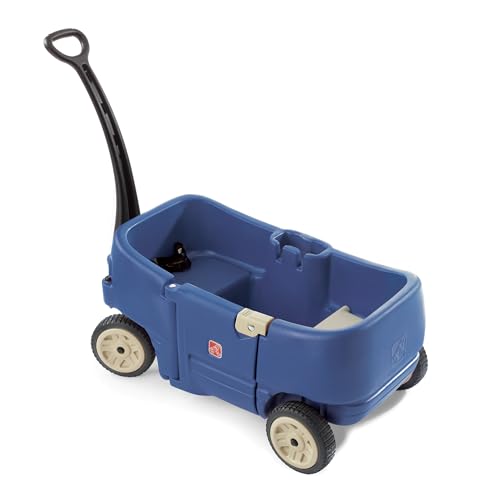
This is the toddler-first plastic wagon. Two contoured seats face each other over a deep leg well, each with its own seat belt, and a latched door lets small riders climb in and out on their own once the wagon is parked. Storage hides under both seats, which is where the snacks, wipes and spare socks actually live, and two cup holders sit within reach of the passengers. The long handle folds under the body for storage, and the molded plastic bed hoses off after a muddy afternoon. It does not fold flat, so it wants a garage corner rather than a trunk, and its smaller weight figure suits it to the preschool years it is built for.
Specs
- Build: Molded durable plastic
- Seats: 2 contoured seats, with seat belts
- Maker weight figure: 75 lb
- Wagon weight: 25 lb
- Entry: Latched side door
- Storage: Under both seats, plus 2 cup holders
- Handle: Long pull handle, folds under the body
- Age range from the maker: 1.5 to 5 years
3. Evenflo Pivot Xplore All-Terrain Stroller Wagon

This is the push-or-pull hybrid for families who walk far. The handle flips from push mode, stroller-style, to pull mode, wagon-style, without tools, so the adult can switch as the ground changes. Two seats carry a child each with a three-point harness, and the all-terrain wheels take grass, gravel and packed trails that stop smaller wheels. A snack tray with cup holders sits between the riders, storage pockets take the small gear, and the frame folds for the car. It is the pick for zoo days, trail walks and festival grounds where a plain pull wagon gets heavy by the second hour.
Specs
- Handle: Flip handle, push or pull
- Seats: 2, each with a 3-point harness
- Wheels: All-terrain
- Tray: Snack tray with cup holders between the seats
- Fold: Folding frame for transport
- Color shown: Ranger Green
4. Baby Trend Expedition 2-in-1 Stroller Wagon PLUS

This is the stroller wagon with the full shade setup. Two seats with three-point harnesses sit under an extra-large canopy with UPF 50+ fabric and a mosquito net that pulls down for evening walks. The handle converts from push to pull, a universal car seat carrier lets an infant ride along beside a toddler, and the storage count is generous: a parent console, a storage basket and six bottle holders spread across the frame. Large wheels and a flat fold round it out. Families with a baby and a toddler, or anyone walking at dusk in bug season, get the most from this one.
Specs
- Handle: Push or pull
- Seats: 2, each with a 3-point harness
- Canopy: Extra-large, UPF 50+ fabric, with mosquito net
- Infant option: Universal car seat carrier
- Maker weight figure: 110 lb
- Wagon weight: 42 lb
- Storage: Parent console, storage basket, 6 bottle holders
- Fold: Flat fold; wheels are quick-release for storage
5. Radio Flyer Classic Red Wagon

This is the original little red wagon, and it earns its place on bed size and build. The seamless all-steel body has rolled, no-scratch edges, a 36-inch bed that swallows two kids, a pile of library books or the entire toy fleet, and 10-inch steel wheels with real rubber tires. The extra-long handle folds under the body, and the controlled turning radius keeps the wagon from tipping when a corner is cut too tight. There are no belts and no canopy here: riders sit on the bed floor with feet inside, an adult pulls at a walk, and the flat bed doubles as the snack table at the park. It is the simplest wagon in this guide and the one most likely to be handed down.
Specs
- Body: All-steel, seamless, no-scratch edges
- Bed size: 36 x 17.5 inches
- Wheels: 10-inch steel wheels, rubber tires
- Maker weight figure: 200 lb
- Handle: Extra-long pull handle, folds under the body
- Steering: Controlled turning radius
- Age floor from the maker: 1.5 years and up
Verdict
For most families, the Radio Flyer 3-in-1 EZ Fold Wagon is the one to buy first: it folds flat, belts two riders, shades them, and turns into a bench when the ride is over. For toddlers who ride close to home, the Step2 Wagon for Two Plus gives real seats, a door they can work and storage that swallows the snack kit. For long walks and mixed ground, the Evenflo Pivot Xplore and the Baby Trend Expedition PLUS push as well as pull, and the Baby Trend adds the infant carrier and the bug net. For the classic steel bed that hauls kids, toys and half the picnic in one trip, the Radio Flyer Classic Red Wagon is still the standard. Whichever one comes home, the habits matter more than the hardware: belts on before it moves, feet inside, a walking pace, and flat ground only.
FAQ
At what age can a child ride in a wagon?
Most makers of wagons in this guide set the floor at about 18 months, when a child can sit upright without support. Stroller wagons with a car seat carrier are the exception, since the carrier holds an infant in its own seat. The maker’s age line is a floor, not a suggestion: a younger child walks or rides in a stroller instead.
Can kids ride in a garden cart or a camping wagon instead?
No. Garden carts, utility carts and camping gear wagons are built for loads, not passengers: they have no seats, no belts and no steering designed around a child. A child who needs a ride belongs in a wagon made for kids, with a restraint for every seat.
How do I keep a wagon ride safe on a path with slopes?
Walk the slope with the adult on the downhill side, keep a firm grip on the handle, and never let the wagon roll free or carry riders down a hill for fun. Riders stay seated and buckled, and the puller never runs, on flat ground or on a slope.
What should I check before each ride?
Buckles first: every belt or harness fastened and snug. Then wheels and hubs clear of string and debris, fold joints locked open, tires firm, and the load under the maker’s weight figure with heavy items low and centered. Thirty seconds of checks prevents most of the ways a wagon ride goes wrong.
FAQ
At what age can a child ride in a wagon?
Can kids ride in a garden cart or a camping wagon instead?
How do I keep a wagon ride safe on a path with slopes?
What should I check before each ride?
More from Amazon
Programs that pair well with the guide above. Offers and eligibility are set by Amazon and may change.
A free business account with business pricing and bulk-buying tools for work, shop or home office.
Create a business accountFree shipping on eligible items, Prime Video and more. Eligible new members can start with a free trial.
Start a Prime free trialAudiobooks and podcasts to listen to on the go. Eligible new members can start with a free trial.
Try Audible freeAd-free music streaming. Eligible new subscribers can start with a free trial.
Try Music Unlimited freeAs an Amazon Associate we earn from qualifying purchases.

Write Your Review
No reviews yet. Be the first to share your experience!