
Key takeaways
- Compare the best reptile hides with snug interiors, rough shedding surfaces, and easy-clean builds for snakes, geckos, and pet lizards daily.
A reptile that cannot hide is a reptile under stress, and stress is the quiet root of refused meals, stuck sheds, and defensive behavior. In the wild, a snake or lizard spends most of its day wedged into a burrow, a rock crack, or a hollow log where predators cannot see it and the walls press close on every side. A good hide recreates that pocket inside the enclosure: dark, snug, and placed where the animal can reach it without crossing open ground. It is the cheapest piece of equipment in the terrarium and one of the most consequential.
Disclosure: As an Amazon Associate, I earn from qualifying purchases. Product details were verified at the time of writing.
This guide covers five hides that span the main styles a keeper will meet: a humidity-holding rock lair, a wide one-piece resin cave, a ceramic three-in-one shelter with a removable lid, a two-piece gecko cave built for egg laying, and a plain black plastic box of the kind snake keepers use by the dozen. Every pick states its dimensions, material, and design, so you can match the hide to the animal’s size and to the spot it will occupy on the warm or cool end of the enclosure.
How to Choose a Reptile Hide
Give the animal a hide on each end of the gradient. A single hide forces a bad trade: the animal can be warm or it can feel safe, but not both. Place one hide over the warm spot and a second on the cool end so the reptile can thermoregulate without leaving cover. Species that shed in one piece, like leopard geckos and many snakes, benefit from a third hide kept humid in the middle or warm zone.
Size for a snug fit, not for growth. A hide works because the walls touch the animal’s body, the way a burrow does. A curled snake or a resting gecko should nearly fill the interior, with its back close to the ceiling. A cave the animal rattles around in reads as open space, not shelter, and oversized hides are the ones keepers find empty day after day. Measure the animal curled, then compare against the interior, not the footprint on the box.
Check the entrance against the animal’s girth. The opening has to pass the widest part of the animal, including a gecko’s hips or a snake just after a meal, without scraping. A single small entrance keeps the interior dark and holds humidity in, which most species prefer; wide, tall openings suit lizards that come and go all day. If the rim of a molded entrance feels sharp, a few passes with fine sandpaper fix it before the hide goes in.
Match the material to your cleaning routine. Resin, plastic, and ceramic hides are non-porous: they scrub clean, tolerate disinfectant, and can be swapped between enclosures after a proper wash. Natural materials such as cork bark and driftwood look superb and offer great texture, but they absorb waste and are hard to sterilize, which matters in quarantine setups and breeding racks. For most keepers, a synthetic hide for the humid spot and natural cover elsewhere is a workable split.
Think about humidity and shedding texture. A humid hide is simply an enclosed hide holding damp sphagnum moss or similar substrate; the trapped moisture softens the old skin layer so sheds come off in one piece instead of patches. Rough exterior texture helps too — snakes and lizards rub against it to start and peel a shed. Smooth plastic boxes are the easiest to clean but offer nothing to rub on, so pair them with a rough rock or branch nearby.
Value weight, stability, and a removable lid. Heavy resin and ceramic hides stay where you put them and double as basking platforms, while light plastic boxes suit tubs and racks where everything gets lifted at feeding time. A lid that lifts off lets you check a shy animal, mist the moss, or collect eggs without dragging the hide out and wrecking the setup around it — a small feature that changes daily care more than any other.
The 5 Best Reptile Hides
1. Zilla Rock Lair, Large

The Rock Lair is the hobby’s benchmark humid hide: a two-piece rock cave whose enclosed chamber traps moisture instead of letting it bleed into the enclosure air. The side entrance and its short ramp cut the light reaching the interior, so the space reads as a burrow rather than a box, and the animal enters at ground level the way it would slip into a den. Load the chamber with damp sphagnum moss and it becomes the spot a leopard gecko or ball python chooses when a shed is coming, and gravid females use the same protected, humid pocket for egg laying. The exterior carries a rough, mossy texture that gives shedding animals something to rub against, and at about five and a half pounds the Large stays planted when a python leans on it. The lid section lifts away for cleaning and egg checks. For a naturalistic enclosure that needs one hide to handle security, humidity, and shedding at once, this is the complete pick.
Specs
- Size: Large, 11 x 7.75 x 6 in
- Material: Plastic with a natural rock finish
- Design: Two-piece cave, side entrance with ramp
- Interior: Humidity-retaining chamber for damp moss
- Weight: About 5.5 lb
- Best for: Ball pythons, leopard geckos, egg-laying females
2. Exo Terra Reptile Cave, X-Large
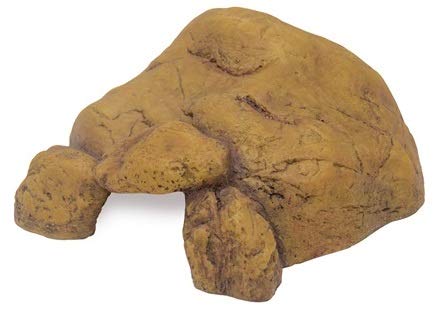
The Exo Terra Reptile Cave is the classic one-piece rock hide, molded from food-grade resin with a pebbled exterior that disappears into desert and woodland setups alike. The X-Large spreads wide rather than tall — nearly twelve inches across with a low profile — which suits ground-dwelling lizards that want to sprawl flat under cover instead of climbing into a dome. The single low entrance keeps the interior shaded, and the enclosed volume holds a cooler, slightly humid microclimate compared with the open enclosure air. The resin body is stable enough that larger reptiles do not tip it when they bulldoze the substrate, and the coated surface wipes down without much fuss. There is no lid and no separate base, so checking a shy occupant means lifting the whole cave; plan its position where that disturbance is acceptable. For bearded dragons, larger skinks, and mid-size snakes that need floor space under cover, this is the straightforward pick.
Specs
- Size: X-Large, 11.8 x 10.9 x 4.5 in
- Material: Food-grade resin
- Design: One-piece rock cave, single low entrance
- Interior: Enclosed volume with a cooler microclimate
- Weight: About 2.9 lb
- Best for: Bearded dragons, larger lizards, mid-size snakes
3. Zoo Med Repti Shelter 3-in-1 Cave, Medium

The Repti Shelter earns its three-in-one name honestly: one ceramic cave serves as a hiding shelter, a humid shedding chamber, and an egg-laying box. The two-piece body separates so you can fill the base with damp Terrarium Moss or Eco Earth, and the removable lid lets you mist the fill, check the animal, or lift out a clutch of eggs without dismantling the enclosure. Ceramic is the material story here — Zoo Med states the shelter can be washed and sterilized, which makes it a strong choice for quarantine tubs and for geckos whose humid hide gets soiled often. The entrance sits in the top section, so the interior stays dark and the humidity stays in. The Medium, at 4 x 7 x 7 inches, is sized for leopard geckos and other small lizards and snakes; ceramic is heavy for its size and will crack if dropped on a hard floor, so handle it over the enclosure rather than the sink. For gecko keepers who want one hide that covers shedding and laying in a sterilizable body, this is the pick.
Specs
- Size: Medium, 4 x 7 x 7 in
- Material: Ceramic
- Design: Two-piece cave with removable lid
- Interior: Fill with damp moss or soil substrate for a humid microclimate
- Care: Washable and sterilizable, per the maker
- Best for: Leopard geckos, small snakes, egg laying
4. Exo Terra Gecko Cave, Medium

The Gecko Cave is built around the two moments gecko keepers care about most: a clean shed and a safe place to lay eggs. It comes in two pieces — a base and a rock-textured top that lifts straight off — so the interior can be lined with damp moss, checked in seconds, and emptied of eggs without digging the animal out of a fixed cave. The enclosed shape keeps the inside dark and humid, which is exactly the combination a leopard gecko seeks out when its skin starts to dull, and females treat the same chamber as a lay box when the season arrives. The resin body is light enough to move at cleaning time yet shaped to sit steady on substrate. The Medium (model PT2865) suits adult leopard geckos, fat-tailed geckos, and smaller crested geckos; keepers of larger species should step up a size rather than squeeze. For a dedicated humid hide that doubles as a lay box, this is the gecko-first pick.
Specs
- Size: Medium, model PT2865
- Material: Resin
- Design: Two-piece cave, lift-off rock top
- Interior: Enclosed chamber for damp moss
- Use: Humid hide and egg-laying site
- Best for: Leopard geckos, crested geckos, fat-tailed geckos
5. Leoterra Snake Hide, X-Large

The Leoterra hide is the plain black box that fills snake racks everywhere, and its virtues are practical rather than decorative. The one-piece plastic body is completely smooth inside and out, so waste wipes off in seconds and the whole hide can be disinfected between occupants — the reason this style dominates breeding and quarantine setups. The entrance is cut low on one side, leaving the rest of the interior in full darkness, and the flat top takes a water bowl or a second lightweight item without complaint. The X-Large footprint, 16.5 x 10.6 x 4.3 inches, fits an adult ball python with room to coil, and the low ceiling keeps the contact-with-walls feeling snakes look for. It will not win any terrarium beauty contest, and it offers no rough surface for shedding rubs, so naturalistic display tanks are better served by the rock styles above. For racks, tubs, and any keeper who cleans hides by the dozen, this is the workhorse pick.
Specs
- Size: X-Large, 16.5 x 10.6 x 4.3 in
- Material: Plastic
- Design: One-piece black box, low side entrance
- Interior: Fully dark, smooth walls
- Care: Smooth surfaces for fast washing and disinfecting
- Best for: Adult ball pythons and other mid-size snakes
Comparison Table
| Hide | Size | Material | Design | Standout trait |
|---|---|---|---|---|
| Zilla Rock Lair, Large | 11 x 7.75 x 6 in | Plastic | Two-piece, side entrance | Humidity-retaining chamber |
| Exo Terra Reptile Cave, X-Large | 11.8 x 10.9 x 4.5 in | Food-grade resin | One-piece rock cave | Wide, low floor plan |
| Zoo Med Repti Shelter 3-in-1, Medium | 4 x 7 x 7 in | Ceramic | Two-piece, removable lid | Washable and sterilizable |
| Exo Terra Gecko Cave, Medium | Medium (PT2865) | Resin | Two-piece, lift-off top | Humid hide and lay box in one |
| Leoterra Snake Hide, X-Large | 16.5 x 10.6 x 4.3 in | Plastic | One-piece black box | Fastest to clean and disinfect |
Frequently Asked Questions
How many hides does one reptile need?
At least two: one on the warm end and one on the cool end, so the animal never has to choose between the right temperature and feeling hidden. Shedding species do better with a third hide kept humid, and many keepers simply make the warm-end hide the humid one.
How snug should a hide be?
Snug enough that the resting animal touches the walls and nearly brushes the ceiling. If the animal can stretch out with open space around it, the hide is too big to register as shelter. When in doubt between two sizes, the smaller one is usually the one the animal actually uses.
What turns a regular hide into a humid hide?
An enclosed shape plus damp substrate inside. Sphagnum moss is the common fill; keep it moist like a wrung-out sponge, never dripping. The enclosed walls slow evaporation, so the air inside stays humid enough to loosen shedding skin and keep eggs from drying out.
Where should the humid hide sit in the enclosure?
Most keepers place it in the warm half or the middle of the gradient, where the moisture stays active and the animal passes through it often. Check the moss every few days, re-mist as it dries, and replace it when it starts to smell or look soiled.
Can I use a cardboard box or a plastic tub instead?
In a pinch, yes — an opaque box with a cut entrance works as temporary cover, especially in quarantine. Cardboard absorbs moisture and grows mold in humid setups, though, and thin plastic tubs are hard to keep in place. A purpose-made hide lasts longer, cleans properly, and holds its position, which is why keepers settle on them for permanent enclosures.
Verdict
Start with the Zilla Rock Lair if you want one naturalistic hide that handles security, humidity, and shedding in a single piece — it suits the widest range of common pets. Bearded dragon and large-lizard keepers should look at the wide, low Exo Terra Reptile Cave, while gecko keepers are best served by the ceramic Zoo Med Repti Shelter or the two-piece Exo Terra Gecko Cave, both built around damp moss and easy egg access. Snake keepers running racks or tubs should take the Leoterra box and spend the saved effort on keeping it spotless. Whichever style you choose, buy the size your animal fills today, put one on each end of the gradient, and keep the humid one’s moss damp — that combination does more for a reptile’s health than any other single furnishing in the enclosure.
More from Amazon
Programs that pair well with the guide above. Offers and eligibility are set by Amazon and may change.
A free business account with business pricing and bulk-buying tools for work, shop or home office.
Create a business accountFree shipping on eligible items, Prime Video and more. Eligible new members can start with a free trial.
Start a Prime free trialAudiobooks and podcasts to listen to on the go. Eligible new members can start with a free trial.
Try Audible freeAd-free music streaming. Eligible new subscribers can start with a free trial.
Try Music Unlimited freeAs an Amazon Associate we earn from qualifying purchases.


Write Your Review
No reviews yet. Be the first to share your experience!