
Key takeaways
- Compare bike helmets for kids by sizes, vents and strap styles, with the two-finger strap rule and level-fit check parents use before rides.
Once a child moves past the balance bike stage, the helmet job changes. School-age riders pedal faster, ride farther, and fall at speeds a toddler never reaches, so the helmet has to fit a bigger head, move real air, and stay put through a whole ride instead of a five-minute driveway loop. Every helmet in this guide is a youth or child size for riders roughly five to fourteen years old, meets the U.S. CPSC Safety Standard for Bicycle Helmets (16 CFR 1203) in the version its maker claims, and adjusts with a dial or pad system so the fit can be checked in seconds before each ride. Toddler helmets for one-to-five-year-olds are a separate shelf with smaller sizes and extended rear coverage, and they have their own guide on this site.

Disclosure: As an Amazon Associate, I earn from qualifying purchases. Product details were verified at the time of writing.
How to Choose a Bike Helmet for an Older Kid
Size by measured head circumference, never by age alone. Wrap a soft tape around your child’s head at the widest point, just above the eyebrows and ears, and match the centimeter number to the maker’s size range. Age labels are a rough guide only: two eight-year-olds can be two sizes apart, and a helmet bought by age is the most common reason a helmet rocks, slips, or gets left at home.
Run the level-fit check every time. The helmet should sit level on the head, not tilted back, with the front edge about two finger-widths above the eyebrows. If you can see a lot of forehead, the helmet is too far back to protect it. The shell should feel snug all the way around, with no wobble when your child shakes their head.
Set the straps in a V, then apply the two-finger strap rule. The side straps should meet in a V shape just under each earlobe, with the sliders sitting right below the ears. Buckle the chin strap and tighten it until no more than two fingers fit between the strap and the chin. A strap looser than that can let the helmet shift or come off in a fall; tighter than that and your child will loosen it the moment you stop watching.
A helmet that has taken a crash is replaced, never reused. The foam liner inside a bike helmet crushes once to absorb impact energy and does not spring back. After any crash or hard hit, even one that leaves the shell looking fine, the helmet is done. The same goes for a helmet with cracked foam, frayed straps, or a buckle that no longer clicks shut with certainty.
Keep helmets off playground climbing gear. A helmet worn on climbing frames, slides, or tree branches can catch on equipment and trap a child by the strap, which is a strangulation risk. Helmets are for wheels: bikes, scooters, and skates. When the riding stops and the climbing starts, the helmet comes off.
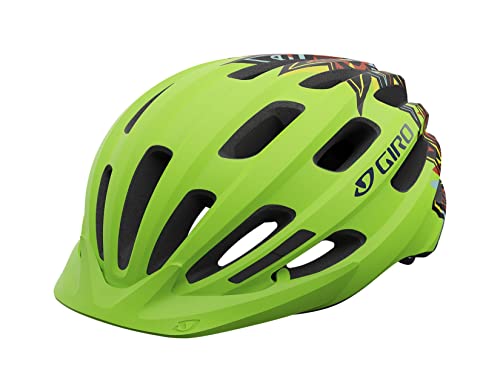
Match vents and style to how your child rides. A rider doing long summer rides needs the airflow of a vented bike helmet with a dial fit. A child who splits time between a bike and a skateboard may be better served by a skate-style shell with dual certification. Either way, the right helmet is the one that fits level, stays snug, and gets worn without a fight.
The 5 Best Bike Helmets for Kids
1. Bell Sidetrack Youth
The Sidetrack is the trail-style pick for the older end of this guide: the Universal Youth size spans 50 to 57 centimeters, the widest range here, so one shell covers most riders from about age five into the early teens. Bell bonds the polycarbonate shell directly to the EPS liner in its fusion in-mold construction, which keeps the helmet light for its coverage, and the shape drops lower at the back of the head than a road-style shell. Fourteen vents move air on warm rides, the visor removes when it gets in the way, and the Ergo Fit dial at the back snugs the fit with one hand. A pinch-guard buckle closes without catching skin, a small detail that still matters on a school morning.
Specs
- Size: Universal Youth, 50-57 cm
- Construction: Fusion in-mold polycarbonate shell with EPS liner
- Fit system: Ergo Fit rear dial
- Vents: 14
- Buckle: Pinch-guard closure
- Extras: Removable visor, sweat guide padding
- Certification: Complies with the U.S. CPSC Safety Standard for Bicycle Helmets for Persons Age 5 and Older
2. Giro Tremor MIPS Child
The Tremor brings Giro’s adult trail-helmet formula down to a child size. The Universal Child shell fits heads from 47 to 54 centimeters, which suits the younger half of this guide, roughly ages five to ten. Inside sits an integrated MIPS layer, a low-friction liner designed to reduce rotational forces in certain angled impacts, paired with the Roc Loc Sport fit system for dial adjustments. Eighteen vents and internal channeling keep air moving across the head, the in-mold construction keeps the shell smooth and light at about 285 grams, and the removable visor shades eyes on sunny rides. For parents who want the rotational-impact layer in a helmet a younger school-age rider will actually keep on, this is the natural first stop.
Specs
- Size: Universal Child, 47-54 cm
- Construction: In-mold polycarbonate shell with EPS liner
- Fit system: Roc Loc Sport dial, integrated MIPS layer
- Vents: 18
- Extras: Removable visor
- Certification: Complies with the U.S. CPSC Safety Standard for Bicycle Helmets for Persons Age 5 and Older
- Weight: About 285 g
3. Giro Hale MIPS
The Hale is the airflow pick. Twenty-two vents, more than any other helmet here, run through an in-mold shell that keeps the weight near 280 grams, so it suits the rider who pedals hard enough to sweat on the ride to school or the trail loop. The Universal Youth size covers 50 to 57 centimeters, and the Roc Loc Sport MIPS fit system pairs the rear dial with the integrated MIPS layer. The side straps are fixed in place with no separate sliders to set, which removes the most common fit mistake parents make with the V shape under the ears: on the Hale, the V is built in, and the only jobs left are the dial and the chin strap. Quick-dry padding and a removable visor round out a helmet aimed squarely at older kids who ride most days.
Specs
- Size: Universal Youth, 50-57 cm
- Construction: In-mold polycarbonate shell with EPS liner
- Fit system: Roc Loc Sport MIPS rear dial, fixed side straps
- Vents: 22
- Padding: Quick-dry interior pads
- Extras: Removable visor, reflective accents
- Certification: Complies with the U.S. CPSC Safety Standard for Bicycle Helmets for Persons Age 5 and Older
4. Schwinn Thrasher Child

The Thrasher is the straightforward pick for the five-to-eight group moving up from a first helmet. The Child size fits heads from 50 to 54 centimeters, and Schwinn’s 360 Comfort system pairs a rear dial with full-range padding that wraps the whole interior, so there is no bare shell edge against the forehead. Twenty vents is a generous count at this size, the microshell build keeps the weight near 230 grams, and the visor detaches when a child prefers the cleaner look. Straps adjust at the sides and under the chin in the standard way, which makes it a good helmet for teaching a child to run the level-fit and two-finger checks on their own gear.
Specs
- Size: Child, 50-54 cm (ages 5-8 as the maker frames it)
- Construction: Lightweight microshell with EPS liner
- Fit system: Rear dial with full-range interior padding
- Vents: 20
- Extras: Detachable visor
- Certification: CPSC Safety Certified for bicycle helmets
- Weight: About 230 g
5. Giro Dime Youth

The Dime is the skate-style option, a youth version of Giro’s long-running Quarter shell for kids who ride bikes and scooters and spend time at the skate park. The Small size fits heads from 51 to 55 centimeters. Instead of a dial, the Dime tunes its fit with swappable interior pads, which gives a close, low fit that does not shift when a rider looks over a shoulder. The tough outer shell wraps further down the sides and back than a vented bike helmet, and the model is dual certified, meeting the CPSC bicycle standard and ASTM F1492 for skateboarding. Airflow is modest next to the Hale or the Tremor, which is the honest trade for the extra coverage, so this is the pick for mixed wheels rather than long summer road rides.
Specs
- Size: Youth Small, 51-55 cm
- Construction: Hard outer shell with EPS liner, skate-style coverage
- Fit system: Swappable fit pads, two sets included
- Vents: 8
- Straps: Riveted webbing anchors with plush chin padding
- Certifications: CPSC 16 CFR 1203 and ASTM F1492 dual certified
Comparison Table
| Product | Size range | Fit system | Vents | Standout trait |
|---|---|---|---|---|
| Bell Sidetrack Youth | 50-57 cm | Ergo Fit dial | 14 | Widest youth range, trail coverage |
| Giro Tremor MIPS Child | 47-54 cm | Roc Loc Sport dial, MIPS | 18 | Smallest fit here with a MIPS layer |
| Giro Hale MIPS | 50-57 cm | Roc Loc Sport MIPS dial | 22 | Most vents, fixed V straps |
| Schwinn Thrasher Child | 50-54 cm | Rear dial, full padding | 20 | Light shell for ages 5-8 |
| Giro Dime Youth | 51-55 cm | Fit pads | 8 | Skate-style shell, dual certified |
Safety Checks Before Every Ride
Level: the front edge sits about two finger-widths above the eyebrows, with the shell flat rather than tipped back.
Straps: the side straps form a V under each ear, and the buckled chin strap leaves room for no more than two fingers.
Shake test: with the strap buckled, your child shakes their head. The helmet should stay in place without sliding forward or sideways.
After a crash: a helmet that has taken a hit is replaced, never reused, even when the damage is not visible.
At the playground: helmets come off before climbing frames, slides, or trees. The strap that protects on wheels can trap a child on climbing gear.
FAQ
How do I measure my child’s head for a helmet?
Wrap a soft measuring tape around the head at the widest point, just above the eyebrows and ears, keeping the tape level. Match that centimeter number to the maker’s size range. If your child lands between sizes, pick the size whose range contains the measurement with room to adjust, and never size up hoping a child will grow into a loose helmet.
What is the two-finger strap rule?
Two checks share the name. The front edge of a level helmet sits about two finger-widths above the eyebrows, and the buckled chin strap should be snug enough that no more than two fingers fit between the strap and the chin. Run both checks before every ride, because straps drift as kids fidget.
What does the CPSC standard mean on a kids’ helmet?
It means the helmet meets 16 CFR 1203, the federal safety standard every bicycle helmet sold in the United States must pass. Helmets in this guide are certified for persons age 5 and older, which is the coverage pattern for school-age riders. Toddler helmets carry a separate age 1 and older pattern with extended rear coverage.
When does a kids’ bike helmet need replacing?
After any crash or hard impact, because the foam crushes once and does not recover. Also replace it when your child’s head reaches the top of the size range, when straps fray or the buckle stops clicking shut firmly, or when the interior pads compress so far that the dial can no longer take up the slack.
Can my child wear a bike helmet on the playground?
No. On climbing frames, slides, and other playground gear, a helmet can catch and the strap can trap a child, which is a strangulation risk. Helmets are for bikes, scooters, and skates. When the wheels stop, the helmet comes off.
Verdict
For most school-age riders, the Bell Sidetrack Youth is the first helmet to try: the widest size range here, a one-hand dial, and trail coverage that suits bikes and scooters alike. Choose the Giro Tremor MIPS Child for a younger rider in the 47 to 54 centimeter band who benefits from the MIPS layer, and the Giro Hale MIPS when airflow matters most, since its 22 vents and fixed V straps make the daily fit check nearly foolproof. The Schwinn Thrasher Child is the light, simple step-up for ages five to eight, while the Giro Dime Youth is the one to pick when a skate park is part of the routine. Whichever shell you choose, measure first, fit it level, set the V under the ears, and keep the chin strap at two fingers.
More from Amazon
Programs that pair well with the guide above. Offers and eligibility are set by Amazon and may change.
A free business account with business pricing and bulk-buying tools for work, shop or home office.
Create a business accountFree shipping on eligible items, Prime Video and more. Eligible new members can start with a free trial.
Start a Prime free trialAudiobooks and podcasts to listen to on the go. Eligible new members can start with a free trial.
Try Audible freeAd-free music streaming. Eligible new subscribers can start with a free trial.
Try Music Unlimited freeAs an Amazon Associate we earn from qualifying purchases.
Write Your Review
No reviews yet. Be the first to share your experience!