
Key takeaways
- Compare playhouses by sizes, materials and door styles, with the level-ground rule and pinch-point check families use before play begins daily.
A playhouse is the one backyard purchase a child walks into: a building at their scale, with a door they can open themselves, windows to peer from, and just enough room inside for a friend, a stuffed animal council, and a pretend kitchen shift. The five houses in this guide are all child-size buildings a toddler or young child physically enters — three molded plastic cottages that shrug off weather and move between yard and playroom, and two wooden houses that stay put and anchor a corner of the garden for years. That boundary matters. Fabric play tents are a lighter, fold-away class with their own guide on this site, and dollhouses are miniatures a child plays at from outside; neither is a substitute for a house a child stands up in.
The honest dividing lines in this class are material, footprint, and door style. Plastic houses are light enough for one adult to carry, wipe clean in minutes, and suit the youngest players because every edge is rounded and every door swings at toddler height. Wooden houses are heavier, taller, and longer-lived, with real half doors, snack windows, and picnic furniture that keep school-age children interested after the plastic cottage feels small. Size runs the same way: the compact plastic cottages here stand about 49 inches tall for the toddler years, while the wooden KidKraft house is built for children up to about ten. Measure the spot before anything else — the house, the swing of its door, and a ring of clear ground around it all have to fit.
Disclosure: As an Amazon Associate, I earn from qualifying purchases. Product details were verified at the time of writing.
How to Choose a Playhouse
Start with the level-ground rule. Every house in this guide belongs on flat, level ground — a lawn without a slope, a porch slab, pavers, or a playroom floor. A house that rocks or leans strains its door hinges, gaps its wall panels, and tips far more easily when a child leans on a wall from inside. Walk the chosen spot, check it with your eye along the ground line, and level it before assembly, not after. Where the maker supplies anchors or directs staking, use them; a light plastic house on an exposed, windy plot needs them even though it feels solid on a calm day.
Match the material to where the house will live. Double-walled plastic is the indoor-outdoor material: it tolerates rain, hoses off, and moves through a doorway when winter pushes play inside. It is the right build for porches and playrooms as much as lawns. Wood — cedar on the Backyard Discovery house, painted wood on the KidKraft — belongs outdoors on a permanent spot. Wooden houses need their finish checked each season and a base that keeps the floor off wet ground, and in return they give taller ceilings, sturdier doors, and play value that stretches into the school years.
Read the door before the decorations. The door is the part a child uses a hundred times a day, and the styles here differ in ways that matter. A Dutch door opens its top half alone, which lets a toddler pass toys through while the bottom half stays shut. A half door on the wooden houses swings low enough for small children to manage without a latch they cannot reach. A full door with a mail slot, like the Little Tikes cottage, feeds letter-delivery games for years. Whatever the style, run the pinch-point check below before the first play session and again each season.
Count real interior room, not the roof line. Manufacturers measure to the peak; children live at the walls. A house near 49 inches tall suits toddlers and preschoolers, and most children outgrow it head-first around age six. If siblings span several years, or the house is meant to stay for a long stretch, the taller wooden builds earn their footprint. Also check whether the house has a floor: the molded-in floor on the Step2 Neat & Tidy keeps feet off wet grass and makes indoor use cleaner, while the floorless Little Tikes cottage must sit on grass, a mat, or a patio so the ground becomes the floor.
Plan the storm answer in advance. Light plastic houses should be brought in, moved against a wall, or anchored down before severe weather — an unanchored cottage can slide or tip in a storm, and loose accessories become garden debris. Wooden houses stay in place, so their storm plan is inspection: after heavy weather, check the roof panels, door swing, and any shifted ground before children go back in.
Safety Comes First
Level ground only, anchored where the maker directs. Set the house on a flat spot away from fences, tree roots, and the fall zone of any swing set. If the maker’s instructions call for stakes or anchors, fit them; if the house sits on a porch or patio, confirm it cannot slide when a child pushes off a wall.
Run the pinch-point check on every door and window. Open and close each door, shutter, and Dutch-door half slowly, watching the hinge side and the latch side — those are the gaps that close on small fingers. Keep hinges clear of fingers during play by teaching children to push doors at the handle or the panel’s center, never at the edge near the hinge. Recheck after any move or storm, because a shifted panel changes the gaps.
No climbing on roofs, ever. Playhouse roofs are weather covers, not climbing structures, and none of the houses here is built to carry a child’s weight on top. State the rule plainly on day one: feet stay inside the house or on the ground, and window ledges and snack counters are not steps either.
Bring plastic houses in or secure them in storms. Before severe weather, move a light plastic house into a garage or against a sheltered wall, or anchor it exactly as the maker directs, and gather loose play accessories. Wooden houses get a post-storm inspection of roof, door, and ground contact before play resumes.
Treat maker age grades as floors. The youngest house here is graded from 18 months; the wooden KidKraft is graded from age three. Those grades reflect door weight, interior height, and small parts in the accessory sets, so a younger child does not graduate early just because an older sibling plays inside. Supervise the youngest players, and keep accessory pieces that a maker grades for older children out of the toddler houses.
The 5 Best Playhouses
1. Step2 Neat & Tidy Cottage — Best First House for Toddlers

The Neat & Tidy Cottage is the toddler benchmark in molded plastic: an open-concept cottage with a working Dutch door, shutters that open and close, and a molded-in floor that keeps the inside clean on grass and makes the house equally at home in a playroom. A doorbell and play phone add sound play at exactly the height a child of 18 months reaches for, and a built-in seat and molded details — stacked-stone styling, a small fireplace shape — give the inside more to do than its footprint suggests. The open back and low walls let an adult see and reach in from any side, which is the feature parents of the youngest players end up valuing most.
Specs
- Material: Molded plastic, double-walled panels
- Dimensions: 53.25 x 33.75 x 49.75 in
- Door style: Dutch door with working doorbell
- Floor: Molded-in floor
- Extras: Play phone, built-in seat, opening shutters
- Maker age grade: 18 months and up
- ASIN: B08Z89CN32
2. Little Tikes Cape Cottage (Blue) — Best Compact House for Porches and Playrooms

The Cape Cottage is the lightest full cottage here, a Victorian-styled plastic house one adult can carry from lawn to porch to playroom as the seasons turn. Its working front door carries a mail slot — a small detail that powers years of letter and package games — and two windows wear shutters that click open and shut. There is no floor, so it wants grass, a mat, or a hard porch surface under it, and that floorless build is also why it packs down and moves so easily. At just under 49 inches tall it suits the two-to-six years best, and its compact footprint fits the small yards and apartment porches the bigger houses cannot.
Specs
- Material: Molded plastic
- Dimensions: 42.75 x 35 x 49 in
- Door style: Full front door with mail slot
- Floor: None — sits on grass, mat, or patio
- Extras: Two shuttered windows, flag holder
- Maker age grade: 2 to 6 years
- ASIN: B084L27VKP
3. Step2 Charming Cottage — Best Plastic House for Longer Toddler Years
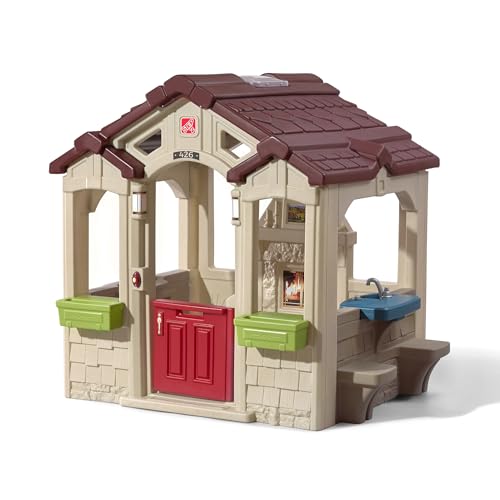
The Charming Cottage is Step2’s larger, more detailed plastic build: a working doorbell, a Dutch door, six windows, and an interior with a built-in table and a molded fireplace that turns the inside into a real room rather than a shell. The realistic stone and wood-look finishing reads more like a small house than a toy, which helps it sit comfortably on a front porch or patio. It keeps the plastic advantages — hose it down, move it with two adults, bring it in for winter — while its taller, roomier interior stretches useful play further into the preschool years than the smallest cottages.
Specs
- Material: Molded plastic with stone and wood-look detailing
- Door style: Dutch door with working doorbell
- Windows: Six, with shutters
- Floor: Molded-in floor
- Extras: Built-in table, molded fireplace
- Maker age grade: 2 years and up
- ASIN: B06XYD58WG
4. Backyard Discovery Sweetwater — Best Wooden Cottage for the Garden

The Sweetwater is the wooden cottage for families who want the house to be a garden fixture: cedar construction, a half door a small child can manage, and a play kitchen inside with a sink, stove, and cookware. A snack bar window with a serving ledge, flowerpot holders by the windows, and a working doorbell fill out the pretend-play side, and the white finish with dark trim suits a landscaped yard. Cedar shrugs off seasons that would fade plastic, and the house’s weight keeps it planted — plan its spot as a permanent one, on level ground with the floor kept off wet soil, and check the finish each spring.
Specs
- Material: Cedar wood, pre-stained white finish
- Door style: Half door
- Kitchen: Play sink and stove with pots, pans, and utensils
- Extras: Snack bar window, flowerpot holders, working doorbell, toy phone
- Placement: Outdoor, permanent level-ground spot
- Maker age grade: 2 to 6 years
- ASIN: B07ZB14C1R
5. KidKraft Modern Outdoor Playhouse — Best Wooden House for Older Kids

The Modern Outdoor Playhouse is the biggest building here and the one that outlasts the toddler years: a white wooden house with black trim, graded from age three and roomy enough for children up to about ten. Its play value sits outside as much as in — an attached picnic table, a mailbox, and an outdoor grill extend the house into a yard-side café, while the interior holds a small crowd of children standing upright. Assembly is a genuine weekend project with a helper, and the finished house is a permanent structure: choose level ground, confirm door clearance, and treat the placement as final.
Specs
- Material: Wood, white finish with dark trim
- Door style: Full front door
- Extras: Attached picnic table, mailbox, outdoor grill
- Placement: Outdoor, permanent level-ground spot
- Assembly: Two-adult build, hardware included
- Maker age grade: 3 years and up
- ASIN: B00JRYH3HS
Quick Comparison
| House | Material | Door style | Floor | Maker age grade |
|---|---|---|---|---|
| Step2 Neat & Tidy Cottage | Plastic | Dutch door | Molded-in | 18 months+ |
| Little Tikes Cape Cottage | Plastic | Full door, mail slot | None | 2–6 years |
| Step2 Charming Cottage | Plastic | Dutch door | Molded-in | 2 years+ |
| Backyard Discovery Sweetwater | Cedar wood | Half door | Wooden base | 2–6 years |
| KidKraft Modern Outdoor | Wood | Full door | Wooden base | 3 years+ |
Frequently Asked Questions
Can a plastic playhouse stay outside all winter?
The plastic houses here tolerate cold and wet, but the safer routine is to bring them under cover or anchor them securely before storm season, then wash them down and run the pinch-point check in spring. Wooden houses stay out by design; their winter routine is clearing heavy snow from the roof and checking the finish.
What ground surface works under a playhouse?
Level lawn, pavers, a porch slab, or a playroom floor all work, as long as the spot is flat and drains. Avoid slopes, low patches that hold water, and the fall zone under swings. A floorless house like the Cape Cottage also needs the surface itself to be a comfortable floor — grass, a mat, or smooth patio.
How long does assembly take?
The plastic cottages snap and screw together in well under an afternoon for one adult. The wooden houses are measured in hours to a weekend, with pre-cut parts and a second adult strongly advised for roof panels.
When does a child outgrow a playhouse?
Headroom decides it. The 49-inch plastic cottages suit most children to about age six; the taller wooden KidKraft house, graded from age three, keeps children playing to about age ten. If siblings span both ranges, the wooden houses serve the whole span longer.
Verdict
Pick the Step2 Neat & Tidy Cottage if the players are toddlers: the molded floor, Dutch door, and open sides are built for the 18-month-to-preschool stretch. Choose the Little Tikes Cape Cottage when the house must move between porch, playroom, and lawn, or the Step2 Charming Cottage when you want plastic that still feels like a real little house. For a permanent garden fixture, the Backyard Discovery Sweetwater brings cedar and a play kitchen to the younger years, and the KidKraft Modern Outdoor Playhouse is the long-haul choice for children who will still be playing house at eight, nine, and ten. Whichever house lands in your yard, the routine is the same: level ground, anchors where the maker directs, the pinch-point check before play, and roofs that are never climbed on.
More from Amazon
Programs that pair well with the guide above. Offers and eligibility are set by Amazon and may change.
A free business account with business pricing and bulk-buying tools for work, shop or home office.
Create a business accountFree shipping on eligible items, Prime Video and more. Eligible new members can start with a free trial.
Start a Prime free trialAudiobooks and podcasts to listen to on the go. Eligible new members can start with a free trial.
Try Audible freeAd-free music streaming. Eligible new subscribers can start with a free trial.
Try Music Unlimited freeAs an Amazon Associate we earn from qualifying purchases.









Write Your Review
No reviews yet. Be the first to share your experience!