
Key takeaways
- Compare the best dog treats by protein source, size, calorie count and texture, with picks for training sessions, puppies, seniors and picky eaters alike.
A treat has a job to do, and the job changes through the day. In a training session you need something tiny, soft and fast to swallow, so the lesson keeps moving. At the end of a walk you might want a bigger reward that takes a moment to enjoy. Once a day, a dental chew can work on teeth while your dog thinks it is simply snack time. Choose by the facts on the bag — the main protein, the size and form of each piece, the calories per treat, and the bag size — and the right pick for each job becomes obvious.
Disclosure: As an Amazon Associate, I earn from qualifying purchases. Product details were verified at the time of writing.
This guide compares five widely sold treats that between them cover the main buying situations: a low-calorie training bite, a soft heart-shaped morsel for fussy eaters, a puppy formula with DHA, a once-a-day dental chew, and a pork liver training reward with hundreds of pieces in the bag. Every pick lists its main protein, form, calories per treat and bag size from the maker’s own label information, so you can compare like with like.
How to Choose the Best Dog Treats
Match the treat to the job. Training rewards should be pea-sized or easy to tear, soft enough to swallow in a second, and low in calories, because a single session can use thirty or more pieces. Daily snacks can be larger and crunchier, since they are given once or twice rather than by the handful. Dental chews are a separate category again: they are sized to the dog’s weight band and fed one per day.
Start with the main protein. The first ingredient tells you what the treat is built on. Chicken is the most common base and suits most dogs. Lamb, salmon, beef and pork liver give you alternatives for dogs that are bored with chicken or do not do well on it. Peanut butter recipes suit households that prefer a meat-free reward. If your dog has a known sensitivity, pick a treat whose headline protein avoids it, and introduce any new treat in small amounts first.
Count the calories per treat, not per bag. Makers print a calorie figure for nearly every treat, and it varies more than people expect: the training bites in this guide run from 2 to 6 calories each, while a full-size dental chew carries roughly ninety. A useful rule of thumb is to keep all treats together under about a tenth of your dog’s daily calories, then trim the main meals slightly on heavy training days.
Pick a texture your dog can handle. Soft and chewy treats are the safest default for puppies, seniors and small dogs, because they break down quickly and can be torn into smaller pieces. Crunchy biscuits take longer to eat and suit dogs that enjoy working on a snack. Very hard chews are a poor match for older teeth, so seniors are usually better served by the soft end of the shelf.
Buy the bag size that matches your pace. Soft treats dry out once opened, so a small pouch makes sense for occasional use, while daily trainers get through a large bag before freshness becomes an issue. Resealable pouches help, and storing the bag in a cool, dry cupboard keeps soft treats soft. If you are trying a new recipe, start with the smallest bag until you know your dog likes it.
1. Zuke’s Mini Naturals Peanut Butter & Oats Recipe — Best for Training Sessions

Zuke’s Mini Naturals are the treat most trainers reach for first, and the peanut butter and oats recipe shows why. Each piece is a soft, mini morsel that a dog can swallow almost without chewing, so a reward lands and the next repetition starts right away. At 2 calories per treat, you can hand out dozens across a long session without crowding out your dog’s meals. The recipe leads with peanut butter and oats, with cherries and added vitamins and minerals in the mix, and it is made without corn, wheat or soy. The soft texture also tears cleanly in half, which stretches the bag further with small dogs and puppies. Because there is no meat in this recipe, it is a handy option for households that prefer to keep rewards plant-based, and the mild flavor tends to work even with dogs that turn away from stronger-smelling treats.
Specs
- Main protein: Peanut butter (with oats)
- Treat size/form: Soft, mini bite-size morsels; tear easily for smaller pieces
- Calories per treat: 2
- Bag size: 6 oz and 16 oz resealable pouches
2. Blue Buffalo Blue Bits Chicken Recipe — Best for Picky Eaters

Blue Bits are soft-moist, heart-shaped training treats with real chicken as the first ingredient, and that meaty lead gives them a stronger aroma than most small bites — exactly what you want when a dog is easily distracted or fussy about rewards. The formula adds DHA, the omega-3 fatty acid associated with learning and development, and leaves out poultry by-product meals, corn, wheat, soy, propylene glycol and red 40. The morsels are tender enough for puppies and seniors alike, and the size suits dogs of every breed, so one pouch can serve a whole multi-dog household. Blue Buffalo sells the chicken recipe in several pouch sizes; the listing linked here is the 9 oz bag, a sensible middle ground for regular training without committing to the largest pouch.
Specs
- Main protein: Chicken (first ingredient)
- Treat size/form: Soft-moist, heart-shaped bite-size morsels
- Calories per treat: About 5
- Bag size: 4 oz, 9 oz and 16 oz pouches (9 oz pouch featured)
3. Wellness Soft Puppy Bites Lamb & Salmon Recipe — Best for Puppies
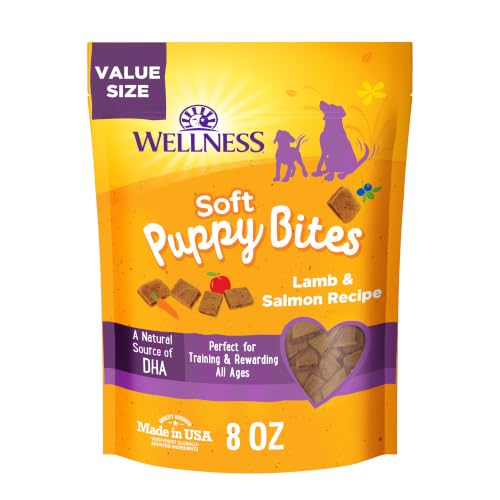
Wellness built these bites specifically for dogs under one year old, and the recipe reflects that job. Lamb and salmon are the two lead proteins, and the salmon brings a natural source of DHA to support healthy brain development during the months when puppies learn fastest. The bites are soft, small squares that young teeth handle easily and that break apart without crumbling, so you can size each reward to a tiny mouth. At 6 calories per treat they sit a little higher than adult training bites, which is reasonable for a growing dog, but it is still worth counting them on days with long practice sessions. The recipe is grain free, with no corn, wheat, soy, artificial flavors or meat by-products, and it folds in carrots, blueberries, sweet potatoes and apples. Choose the 3 oz pouch to test the flavor, then move to the 8 oz bag once your puppy is hooked.
Specs
- Main protein: Lamb and salmon
- Treat size/form: Soft, bite-size squares; easy to break into smaller pieces
- Calories per treat: 6
- Bag size: 3 oz and 8 oz pouches
4. GREENIES Original Regular Dental Treats — Best Daily Dental Snack

GREENIES are the once-a-day chew in this guide, and they work to a different brief from the training bites above. The Regular size is made for dogs between 25 and 50 pounds, with a chewy, toothbrush-shaped texture that works against plaque and tartar as the dog chews, while freshening breath. The recipe carries the Veterinary Oral Health Council’s seal for tartar control, and the chews are made with natural ingredients plus added vitamins and minerals. Feeding is simple: one chew per day, chosen by your dog’s weight band — Teenie, Petite, Regular and Large sizes cover the full range. At roughly ninety calories, a Regular chew is a real snack rather than a nibble, so count it as part of the day’s food. The 36 oz tub holds 36 chews, about a month’s supply for one dog. Always watch your dog with any chew and make sure it is chewed rather than gulped.
Specs
- Main protein: Chicken (original chicken flavor)
- Treat size/form: Chewy dental chew, Regular size for dogs 25–50 lb
- Calories per treat: About 90 (one per day)
- Bag size: 36 oz tub, 36 count (smaller packs also sold)
5. Pet Botanics Training Rewards Bacon Flavor — Best for Long Sessions and Seniors

Pet Botanics builds its Training Rewards on pork liver as the first ingredient, finished with real bacon, and the result is a small, soft and chewy bite with a strong savory smell that holds a dog’s attention through long practice. Trainers have used this line for years because the pieces stay moist in a pouch or pocket instead of drying into crumbs, and the 20 oz bag holds roughly 500 treats, so one purchase covers weeks of daily work. At 3 calories per treat for the standard size, the count stays manageable even in busy sessions, and a Mini version of the same recipe drops to about 1.5 calories per piece for very small dogs. The soft texture is gentle on older mouths, which makes these a practical pick for senior dogs that still enjoy training games but struggle with hard biscuits. A botanical blend with rosemary and chamomile rounds out the recipe.
Specs
- Main protein: Pork liver (first ingredient) with real bacon
- Treat size/form: Soft and chewy small bites; moist, pouch-friendly texture
- Calories per treat: 3 (Mini version about 1.5)
- Bag size: 20 oz bag, roughly 500 treats (Mini in 4 oz and 10 oz bags)
Comparison Table
| Product | Main protein | Form | Calories per treat | Bag size |
|---|---|---|---|---|
| Zuke’s Mini Naturals Peanut Butter & Oats | Peanut butter | Soft mini morsels | 2 | 6 oz / 16 oz pouches |
| Blue Buffalo Blue Bits Chicken | Chicken | Soft-moist heart-shaped bits | About 5 | 4 oz / 9 oz / 16 oz pouches |
| Wellness Soft Puppy Bites Lamb & Salmon | Lamb and salmon | Soft bite-size squares | 6 | 3 oz / 8 oz pouches |
| GREENIES Original Regular | Chicken | Chewy dental chew | About 90 | 36 oz tub (36 count) |
| Pet Botanics Training Rewards Bacon | Pork liver and bacon | Soft chewy small bites | 3 | 20 oz bag |
Frequently Asked Questions
How many treats can I give my dog in a day?
Let calories decide. Add up the treats you plan to give and keep the total near a tenth of your dog’s daily calorie needs. With 2- or 3-calorie training bites, that allowance stretches to dozens of pieces; with a full-size dental chew, the single daily chew uses most of it on its own.
What makes a good training treat?
Three things: small size, soft texture and low calories. The dog should swallow it in a second and be ready for the next cue, and the calorie count should be low enough that thirty rewards do not replace a meal. A strong smell helps hold attention outdoors, where distractions compete with you.
Are soft treats better than crunchy biscuits?
For training, yes — soft treats are eaten quickly and can be torn to size. Crunchy biscuits suit quiet moments as an occasional snack, and some dogs simply enjoy the crunch. Seniors and puppies usually do better with soft textures, which are kinder to teeth and gums.
Can puppies eat adult treats?
Small amounts of a simple adult treat will not hurt most puppies, but a puppy recipe is the better default in the first year. Puppy treats are sized for small mouths and often add DHA for brain development. Whatever you choose, keep pieces small and supervise, since puppies chew enthusiastically and swallow fast.
How should I store treats once the bag is open?
Seal the pouch after each use and keep it in a cool, dry cupboard. Soft treats slowly dry out over a few weeks, so buy a size your dog will finish in that window. If a treat smells off or grows mold, throw the bag away rather than feeding around the bad pieces.
Verdict
For pure training work, the Zuke’s Mini Naturals peanut butter recipe is the easiest recommendation in this guide: tiny, soft and only 2 calories apiece. The Blue Buffalo Blue Bits earn their place when a dog needs a meatier smell to stay interested, and the Wellness Soft Puppy Bites are the puppy-specific choice, with lamb, salmon and DHA in a soft square. Give the GREENIES Regular chew the daily dental slot for mid-size dogs, one per day. And for households that train often — or share their days with a senior dog that still loves the game — the big bag of Pet Botanics Training Rewards delivers hundreds of gentle, low-calorie rewards. Match the treat to the job, count the calories, and your dog will happily do the rest.
More from Amazon
Programs that pair well with the guide above. Offers and eligibility are set by Amazon and may change.
A free business account with business pricing and bulk-buying tools for work, shop or home office.
Create a business accountFree shipping on eligible items, Prime Video and more. Eligible new members can start with a free trial.
Start a Prime free trialAudiobooks and podcasts to listen to on the go. Eligible new members can start with a free trial.
Try Audible freeAd-free music streaming. Eligible new subscribers can start with a free trial.
Try Music Unlimited freeAs an Amazon Associate we earn from qualifying purchases.

Write Your Review
No reviews yet. Be the first to share your experience!